The browser you are using is not supported. Please consider using a modern browser.


Shining a Light on Community Solar in New York
By enrolling in a New York community solar program, residents can save up to 15% on their electricity bill. Learn how community solar works, how to enroll, and how to compare NY community solar providers.

Key Takeaways
- Community solar allows New York renters, homeowners, and apartment dwellers to save 5–15% annually on electricity costs without the need for rooftop panel installations or upfront costs.
- Subscribers receive monthly solar credits on their utility bills for the energy produced by a local solar farm, then pay the provider for those credits at a guaranteed discount.
- New York is currently the #1 community solar market in the United States, with over 2.0 gigawatts of installed capacity helping the state reach its goal of 70% renewable electricity by 2030.
- Major providers like Arcadia and Nexamp offer easy sign-ups (often under 10 minutes) with many plans featuring no enrollment fees, no long-term contracts, and special incentives for low-to-moderate income households.
Table of Contents

If you live in New York and want to support clean energy—without installing panels on your roof—community solar may be the easiest way to do it. With dozens of active solar farms across the state and new ones coming online every year, community solar in New York has grown into one of the nation’s most successful shared solar programs. Best of all, joining a project can help you lower your monthly electricity bills while strengthening the state’s renewable energy future.
This guide walks through how New York’s community solar program works, how to enroll, expected savings, and how to compare top providers such as Arcadia and Nexamp.
What Is Community Solar in New York?
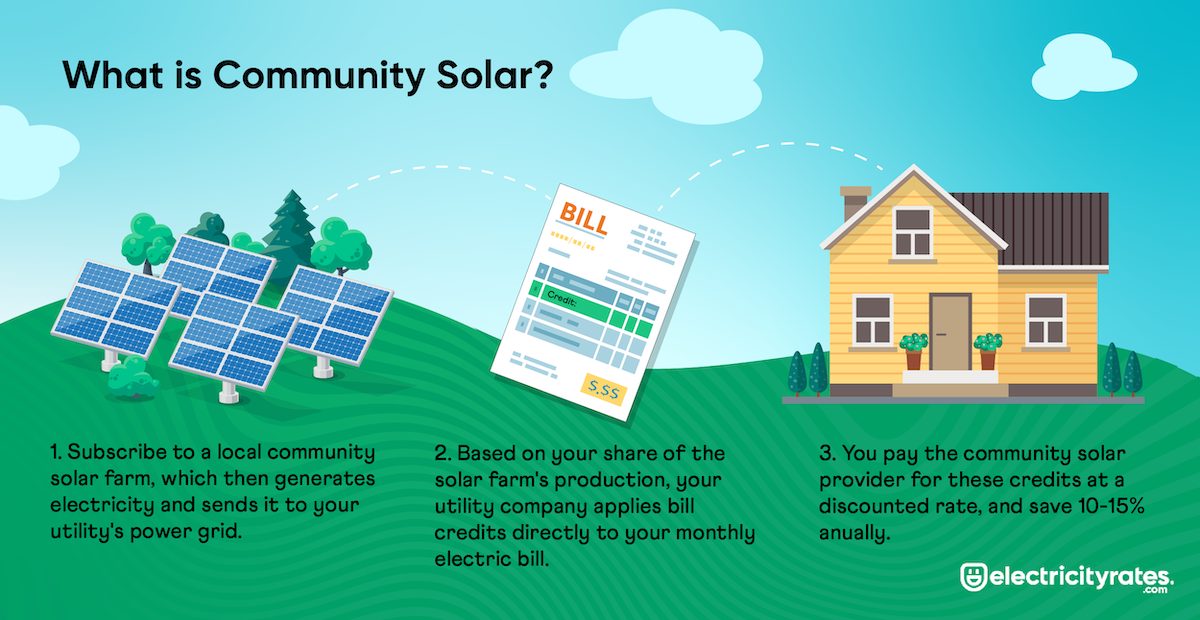
Community solar programs in New York allow residents to subscribe to a portion of a local solar farm and receive bill credits for the clean energy it produces. Instead of installing panels on your home, you “share” a large solar array that feeds renewable electricity to the grid.
Here’s how it works:
- A solar developer builds a solar farm in your region.
- New Yorkers who live within that utility service area can subscribe.
- Each month, the solar farm sends renewable energy to the grid.
- Your utility applies solar credits to your bill, reducing your balance.
- You pay your community solar provider for those credits—usually at a guaranteed discount.
The result: Clean energy for the grid and real savings for you.
Participation in NYC community solar and across the Empire State has surged in recent years, especially among renters, condo owners, and homeowners who can’t install rooftop panels.
What Are the Benefits of Community Solar?
-
Lower Monthly Electricity Bills
Most New York solar programs offer 5–10% guaranteed discounts on the value of the solar credits you receive.
-
No Panels, No Maintenance
Because the solar farm is off-site, you never have to install equipment or manage upkeep. This makes community solar ideal for renters, multi-family residents, or homes with shade.
-
Supports New York's Clean Energy Goals
New York aims for 70% renewable electricity by 2030. Community solar already plays a major role, contributing more than 2.0 gigawatts (GW) of installed capacity statewide, which is approximately 40% of New York’s total solar power generation.
-
Helpful for Low and Moderate Income (LMI) Households
New York offers additional community solar incentives for LMI households through the NY-Sun program, increasing savings and enrollment access.
-
It's An Investment in Local Energy
Community solar programs in New York connect you to local clean energy projects, supporting job creation and renewable energy development across the state.
How Much Can I Save by Joining a New York Community Solar Program?
Savings vary by provider and region, but most subscribers can expect:
- 5–10% annual savings on electricity costs
- No subscription fees
- No long-term contract in many cases (some offer flexible, cancel-anytime options)
Low-to-moderate income customers may qualify for additional discounts, tiered benefits, or priority placement on waitlists, depending on the provider and specific project.
While savings are not guaranteed, New York’s community solar program is designed to provide consistent bill credits and predictable monthly reductions for most households.


How to Sign Up for Community Solar in New York
The enrollment process is straightforward:
- Check project availability based on your ZIP code and utility provider.
- Choose a provider and subscription plan (many offer flexible, no-fee cancellation).
- Share your utility account number so your provider can assign your credits.
- Start receiving solar credits on your monthly utility bill.
- Pay your community solar provider for the credits—usually at a guaranteed discount.
Most sign-ups take under 10 minutes, and you don’t need to change your utility or current electricity plan.
How to Know if Community Solar Is Right for You
Deciding if community solar is the right choice involves considering several factors. If you live in New York and lack a suitable roof for solar panels, or if you’re a renter, community solar offers a practical solution to participate in renewable energy. It’s also worth considering if you’re looking for ways to lower your electricity bills while supporting local renewable energy projects. Comparing NY community solar providers and plans is necessary to find the best fit for your energy needs and financial goals.
What Is the Difference Between Community Solar and Green Energy Plans?
While both community solar and green energy plans aim to increase the use of renewable resources, there are key differences. Community Solar in New York focuses on sharing the output of a local solar farm among community members, directly connecting consumers with their energy source. Green energy plans, on the other hand, may source electricity from a variety of renewable sources, which may not necessarily support local jobs or energy independence.
What is the Difference Between Community Solar and Rooftop?
Rooftop solar systems require homeownership and a significant upfront investment. They offer personal energy production and the potential for increased property value. In contrast, community solar is an accessible alternative that doesn’t require property ownership, upfront costs, or suitable roofing conditions. It is more inclusive and appeals to a broader range of people.
With community solar, participants share the energy production, contributing to sustainability without the logistical and financial commitments of rooftop installations. The decision between the two options depends on individual circumstances, such as financial readiness, property suitability, and personal preferences for energy independence or community participation. Both choices promise to use renewable energy but cater to different needs.
You must live in the same utility territory as the solar farm you subscribe to (e.g., Con Edison, NYSEG, RG&E, National Grid, Central Hudson, PSEG Long Island).
Community Solar Companies in New York
Arcadia
- Provider Score™ 4.63 / 5
- Energy Options
- Service Areas DC, DE, IL, MA, MD, NJ, NY, RI, VA
Provider Bio
Founded in 2014 with the mission to democratize clean energy, Arcadia grew to become the nation's largest manager of community solar by bridging the gap between consumers and renewable energy developers. The company has expanded their reach of putting clean energy into the grid across numerous states, and preventing billions of pounds of coal from being burned annually. Arcadia's core value proposition lies in making renewable energy universally accessible and affordable; it allows renters and homeowners alike to support local solar farms without upfront costs or rooftop installations, while guaranteeing a 5% to 15% savings on their electricity bills.
Nexamp
- Provider Score™ 4.63 / 5
- Energy Options
- Service Areas IL, MA, MD, NJ, NY
Provider Bio
Founded in 2007 by two U.S. Army veterans, Nexamp has grown into a leading clean energy provider dedicated to democratizing solar power. By developing and managing extensive networks of distributed solar farms and energy storage systems across the country, the company plays a pivotal role in accelerating the transition to a modern, renewable grid. Their core value proposition lies in making sustainability accessible and affordable, allowing homeowners, renters, and small businesses to subscribe to a local solar project and save an average of 10% to 15% on electricity costs without any rooftop installation, sign-up fees, or long-term commitments.
Perch Energy
- Provider Score™ 4.7 / 5
- Energy Options
- Service Areas DC, MA, MD, NJ, NY
Provider Bio
Perch Community Solar acts as a major bridge to renewable energy by allowing renters, homeowners, and businesses to subscribe to local solar farms without needing to install rooftop panels. By managing more than 3 gigawatts (GW) of solar capacity across over 1,000 projects nationwide, the company has successfully driven the generation of over 6.6 billion kWh of clean power directly into the electric grid. This massive injection of renewable energy significantly diversifies local power supplies, cuts down reliance on fossil fuels, and accelerates the transition toward a cleaner, more resilient energy infrastructure.
Solstice
- Provider Score™ 4.7 / 5
- Energy Options
- Service Areas IL, MA, NJ, NY, VA
Provider Bio
Solstice Community Solar is a purpose-driven organization dedicated to democratizing clean energy by connecting households, renters, and businesses to local, shared solar farms without requiring rooftop installations. By expanding access to historically underserved and low-to-moderate-income communities through inclusive qualifying metrics like their proprietary EnergyScore, Solstice helps scale the adoption of renewable energy. This community-centered model has successfully funneled over 100 megawatts of clean electricity directly into the local power grid, significantly lowering carbon emissions while providing millions of dollars in collective utility bill savings.
History of Community Solar in New York
New York launched its community solar initiative in 2015 as part of the state’s Reforming the Energy Vision (REV) strategy. The first community solar farm came online shortly after, paving the way for one of the most robust markets in the U.S.
Key milestones:
- 2015: State regulators approve community solar under the Shared Renewables Program
- 2017–2019: Rapid expansion as developers gain access to NY-Sun incentives
- 2020: New York becomes the #1 community solar market in the nation
- 2022: The state surpasses 1 GW of community solar capacity
- Today: New York continues to lead the country in community solar adoption, with programs expanding into Buffalo, Rochester, Albany, Long Island, the Hudson Valley, and community solar NYC neighborhoods
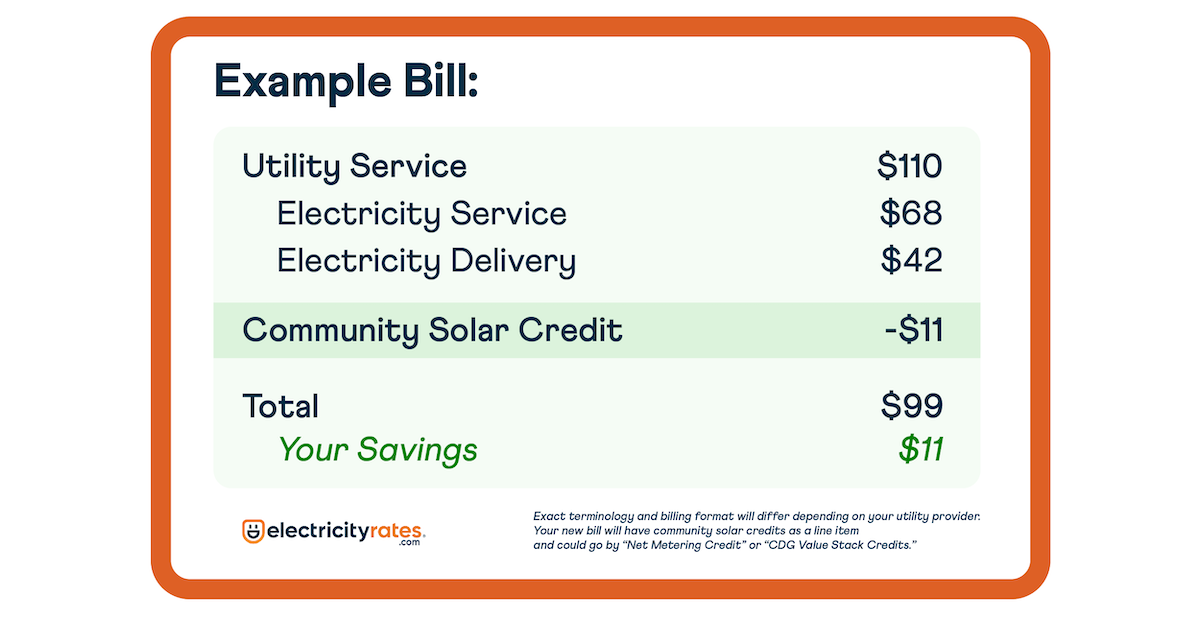
What to Expect With Your New Solar Bills
In New York, there is what’s called Universal Consolidated Billing (UCB). This means that, as a community solar subscriber, you simply receive your regular utility bill from Con Edison or National Grid and it’ll just have an additional section or line item showing your solar farm credits and how much they’re offsetting your total cost. UCB is the preferred method within the industry and makes it seamless for you, as the subscriber. That’s because you don’t need to do anything differently.
How to Find and Compare Community Solar Near You
Finding and comparing community solar projects near you is a straightforward process when you know what to look for. To choose the best option, you should evaluate providers based on their guaranteed discount percentage and the specific contract length or cancellation terms.
It is also important to consider the billing method, such as whether they use dual or consolidated billing, and ensure the project is available within your specific utility territory. Additionally, you should check for LMI (Low-to-Moderate Income) program eligibility and research the provider’s reputation through customer reviews.
ElectricityRates.com simplifies this entire journey by offering clear, side-by-side details on leading providers, helping you select the plan that perfectly fits your household’s needs. You can also use our comparison tools to find the most affordable electricity options for your home or business, or explore which New York utility providers support community solar participation. Plus, our energy-saving and efficiency resources can help you make the most of your monthly budget. If you’re looking to understand the broader electricity landscape in the state, visit our New York electricity guide to get up to speed on utilities, rates, renewable programs, and how the market works.
New York Community Solar FAQs
-
No. Community solar lets you benefit from solar energy without installing panels on your home. You subscribe to a local solar farm and receive credits on your utility bill for the energy it produces.
-
No. You keep the same utility provider and electricity service. Community solar works alongside your existing utility and simply applies solar credits to your monthly bill.
-
Yes. Community solar in New York is open to renters, apartment residents, and homeowners alike, as long as you live within the same utility territory as the solar project.
-
If you move within the same utility territory, you may be able to transfer your subscription to your new address. If you move outside the service area, most community solar programs allow you to cancel without penalties, especially for no-contract or flexible plans.