The browser you are using is not supported. Please consider using a modern browser.


How to Find the Best National Grid Electricity Rates
The current National Grid price to compare is 17.19¢ per kilowatt-hour (kWh) as of October 2026. This page will guide you through how to find the best electricity plan for your needs and provide resources on how to save money on your electricity bill.

Key Takeaways
- National Grid electricity bills are split into fixed delivery charges (maintained by National Grid) and variable supply charges (which customers can lower by switching suppliers).
- National Grid's default default rate (Price to Compare) sets the standard rate to beat—currently at 17.19¢ per kilowatt-hour (kWh) as of October 2026.
- Customers can access energy-saving programs and rebates through Mass Save, including free home energy audits and discounts on smart thermostats and heat pumps.
Table of Contents

National Grid is one of the largest energy companies in the US, delivering electricity to over 20 million customers throughout Massachusetts, New York and Rhode Island. National Grid prides itself on working hard to transform the generation and delivery of energy. They are achieving this through smarter, cleaner and more resilient solutions that create a sustainable future.
If you’re a National Grid customer in Massachusetts, you benefit from Energy Choice. This gives you the ability to compare electricity rates, pay less than your neighbors for electricity and realize savings on your bill.
Reading Your National Grid Electricity Bill
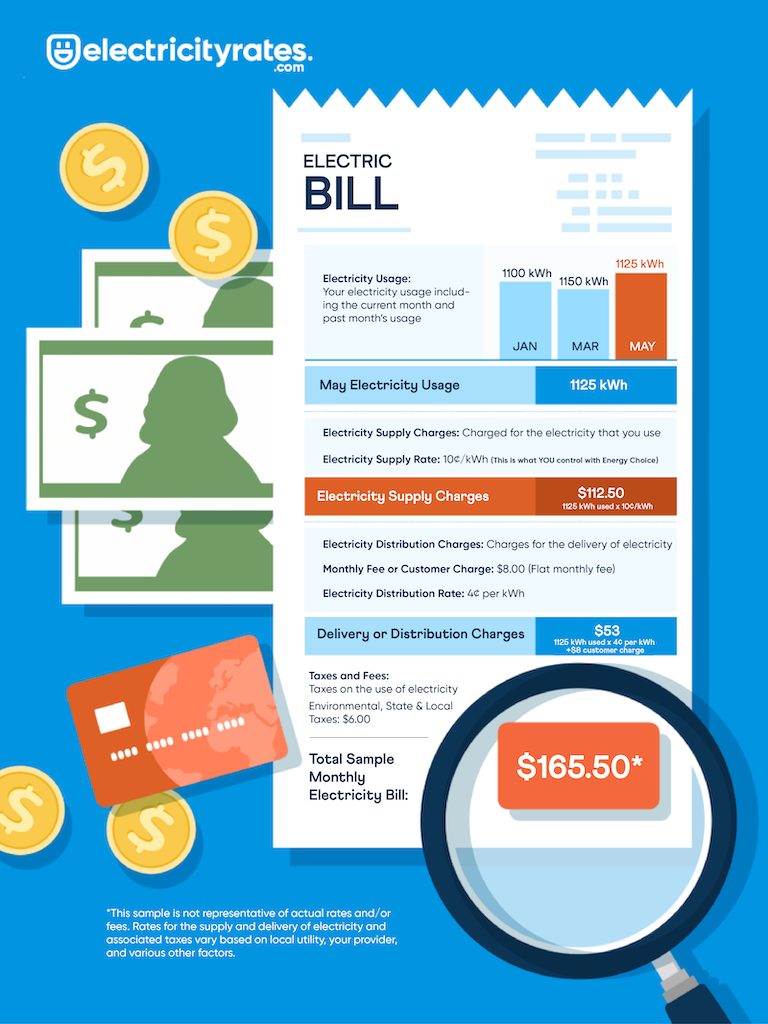
Two types of charges make up your electricity bill. Those are delivery charges for safe and reliable energy delivery and supply charges for the electricity that you use.
Delivery Charges
Charged by National Grid to maintain electricity infrastructure like poles and wires. This set rate that doesn’t change when you switch providers.
Supply Charges
Supply charges are what you pay for the electricity that you use. By default, these charges are set by National Grid and may fluctuate based on wholesale energy market conditions.
Head to this page for more detailed information about your National Grid bill including where to find your account number, Price to Compare and more.
Financial Assistance for National Grid Customers
Federal, state, and utility-level programs provide energy bill assistance, discount rates, and debt relief to eligible National Grid customers (with a focus on Massachusetts residents).
Federal Assistance Programs
- LIHEAP (Low Income Home Energy Assistance Program): A federally funded grant program that pays a direct benefit to National Grid on behalf of income-eligible households to offset seasonal heating and electric bills. Eligibility is based on household size and state median income (generally up to 60% SMI).
- WAP (Weatherization Assistance Program): Provides eligible low-income homeowners and renters with full-scale energy-efficiency improvements at no cost—including air sealing, insulation, and heating equipment repair—to permanently reduce long-term electric and gas usage.
State-Level Programs
- Good Neighbor Energy Fund: Managed in partnership with the Salvation Army, this emergency state fund provides one-time financial grants to residents experiencing temporary financial hardship who earn between 60% and 80% of the state median income—making it a crucial bridge for households that earn too much to qualify for federal LIHEAP grants.
- RAFT (Residential Assistance to Families in Transition): Provides short-term emergency financial relief to low-income families at risk of utility shut-offs, housing instability, or displacement.
- Mass Save Low-Income Energy Affordability Program: Offers income-eligible households enhanced rebates, zero-cost weatherization, and no-cost home heating/cooling system repairs through local Community Action Agencies (CAPs).
National Grid Utility-Specific Programs
- Tiered Discount Rates (R-2 Class)
- Arrearage Management Program (AMP)
- Special Medical Protections & Budget Billing
National Grid offers a discounted electricity supply and delivery rate to income-eligible residential customers. Discounts range from 32% up to 71% off your monthly electric bill depending on household income tiers and size.
How to Qualify: You automatically qualify if you participate in public benefit programs like MassHealth (Medicaid), SNAP, SSI, TAFDC, WIC, or LIHEAP.
Also known as the Forgiveness Program, AMP helps customers with past-due utility debt erase their balances.
Requirement: Your account must have a past-due balance of at least $300 that is 60+ days overdue, and you must be enrolled in the Low-Income Discount Rate.
How it Works: You are placed on a fixed monthly budget plan. For every monthly bill you pay on time, National Grid forgives 1/12th of your past-due debt (up to a maximum of $12,000 per year).
Special Protections: Customers facing financial hardship who have seniors (65+), infants under 12 months, or individuals with serious medical conditions/life-sustaining equipment living in the home can register for shut-off protection.
Balanced Billing/Budget Plan: Spreads your total annual energy charges evenly over 12 months to prevent drastic bill spikes during high-use summer and winter months.
Lower Your Electric Bill with Mass Save® Incentives
Beyond switching your electricity supplier, Massachusetts residents can slash their monthly power bills by tapping into Mass Save®—a collaborative initiative sponsored by Massachusetts gas and electric utilities (including Eversource, National Grid, and Unitil).
Because you already pay a small Energy Efficiency line item on your monthly bill, you are automatically eligible for these state-mandated savings programs.
Key Benefits & Offers:
- No-Cost Home Energy Assessments: A certified energy specialist inspects your home’s efficiency (virtually or in person) and provides immediate, complimentary upgrades like smart thermostats, low-flow showerheads, and advanced power strips.
- Up to 75–100% Off Approved Insulation: Mass Save covers 75% to 100% of the cost to seal air leaks and add wall or attic insulation, keeping heating and cooling costs from escaping.
- Thousands in Heating & Cooling Rebates: Upgrade to high-efficiency electric heat pumps or water heaters and receive up to $10,000+ in direct rebates.
- 0% HEAT Loan Financing: Qualified homeowners can access 0% interest financing (up to $25,000 with terms up to 7 years) for eligible energy-efficient home improvements.
What is the National Grid Price to Compare?
The current National Grid price to compare is 17.19¢ per kilowatt-hour (kWh) effective August 1st, 2026 through January 31st, 2027.
The “price to compare” (PTC) is a benchmark rate set by your local utility company that allows you to compare their standard electricity rate with offers from other retail suppliers.
| Price to Compare Effective Date Range | Price to Compare (rate per kWh) |
|---|---|
| August 1st, 2026 - January 31st, 2027 | 17.19¢ |
| February 1st, 2026 - July 31st, 2026 | 15.37¢ |
| August 1st, 2025 - January 31st, 2026 | 15.48¢ |
| February 1st, 2025 - July 31st, 2025 | 14.67¢ |
What are the Best National Grid MA Electricity Rates?
Best National Grid Electricity Providers
There are dozens of electricity providers in Massachusetts, but not all are created equal. The best combine great rates, fantastic service, and more to deliver a customer-first experience.
ElectricityRates.com created the Provider Score rating system to assess providers based on these important criteria. To see how providers stack up against each other, check out our Best Massachusetts Electricity Providers report.
Tips for Choosing a Provider
- Evaluate Your Needs: Consider your energy usage patterns, budget, and preferences for renewable energy.
- Check Reviews and Ratings: Look for customer reviews and ratings to gauge provider reliability and customer service.
- Understand Contract Terms: Pay attention to contract length, cancellation fees, and other terms
How to Compare Rates and Secure a Fixed-Rate Plan
Massachusetts consumers have several avenues available to explore competitive electricity rates and potentially lock in a fixed-rate plan to avoid National Grid’s Price to Compare fluctuations:
- Explore the Energy Switch Massachusetts Website: The Energy Switch Massachusetts website operated by the Massachusetts Department of Public Utilities offers a comprehensive marketplace with potentially hundreds of competing energy offers. While this provides a wide array of choices, navigating through numerous plans and determining the best supplier for your specific needs can sometimes feel overwhelming.
- Simplify Your Search with ElectricityRates.com: ElectricityRates.com offers a secure, fast, and simple process designed to streamline your rate comparison experience. We present you with only the best rates from top-rated and trusted electricity suppliers serving Ohio, saving you time and effort in your search for the ideal plan.
- Shop Directly Through Supplier Websites: You also have the option to visit individual energy suppliers’ websites. However, keep in mind that you will only see the plans offered by that specific supplier, requiring you to visit multiple websites to get a broader view of the competitive landscape.


Cut the Power Cord With Your Electricity Provider
Make the switch. Shop competitive rates from leading providers in minutes.
National Grid Contact Information
- Customer Service Number: 1-800-322-3223
- Report an Outage Number: 1-800-465-1212
- Official Website
- Report an Outage
National Grid FAQ's
-
Energy Choice allows Massachusetts residents to select an independent retail electricity supplier for their supply rates rather than defaulting to National Grid’s utility rates. While a third-party supplier handles the supply cost, National Grid still manages power delivery, billing, and outage repairs without any interruption in service.
-
The Price to Compare (PTC) is National Grid’s standard default rate per kilowatt-hour (kWh) for electricity supply. It serves as a benchmark for customers to evaluate whether competing retail energy suppliers offer lower rates or better terms. Rates adjust periodically based on set seasonal schedules.
-
No. National Grid remains your local utility regardless of which electricity supplier you choose. They continue to maintain the lines, deliver your power, process your bill, and respond to power outages and emergency service requests.
-
Through the Mass Save program, National Grid customers in Massachusetts can access incentives such as free home energy audits, instant rebates on smart thermostats (e.g., $100 off), and substantial discounts or rebates on energy-efficient upgrades like heat pumps.