The browser you are using is not supported. Please consider using a modern browser.


A Guide to Solstice Community Solar
 Solstice
Provider Snapshot
Solstice
Provider Snapshot
- Founded: 2014
- Headquarters: Cambridge, MA
- Service Areas: IL, MA, NJ, NY, VA
- Provider Score™: 4.7 / 5

Key Takeaways
- Solstice helps customers access local solar savings without installing rooftop panels, buying equipment, or changing how electricity is delivered to their home.
- Subscribers earn solar credits from their share of a community solar farm, then pay for those credits at a discount.
- Solstice currently promotes community solar programs in Illinois, Massachusetts, Minnesota, New Jersey, New Mexico, New York, and Virginia, though availability depends on ZIP code, utility, and open project capacity.
- In deregulated markets, customers may be able to pair a Solstice community solar program with a competitive REP plan to achieve additional savings on their electricity bills.
Table of Contents

Who is Solstice?
Solstice is a community solar company focused on making clean energy more affordable and accessible for everyday electricity customers.
The company began with a simple idea: clean energy should not be limited to homeowners with the right roof, enough sun exposure, or the upfront budget to install solar panels. Through its community solar model, Solstice connects eligible households and businesses to local solar farms, allowing them to support renewable energy and save on electricity without installing anything on their property.
Solstice originally launched as a nonprofit initiative focused on expanding clean energy access, especially for households that were often ineligible for rooftop solar. It later developed a for-profit technology and subscriber management platform designed to connect customers, utilities, and local solar projects more efficiently.
In 2026, Solstice joined Perch Energy, another major community solar provider and subscriber management company. This combination expands the company’s ability to serve solar developers, utilities, businesses, and residential subscribers across more community solar markets. You can also learn more about Perch Energy community solar on ElectricityRates.com.
For consumers, the value proposition is straightforward: Solstice gives you a way to participate in solar energy without rooftop panels, installation costs, or changes to your everyday electric service.
How Solstice Community Solar Works
Community solar is sometimes called “solar for the rest of us” because it expands access to solar for people who cannot or do not want to install panels on their own property.
Instead of producing power from your roof, a community solar farm generates electricity and sends it to the local grid. You subscribe to a portion of that solar farm based on your electricity usage. As your share of the project produces energy, you receive solar credits on your electric bill.
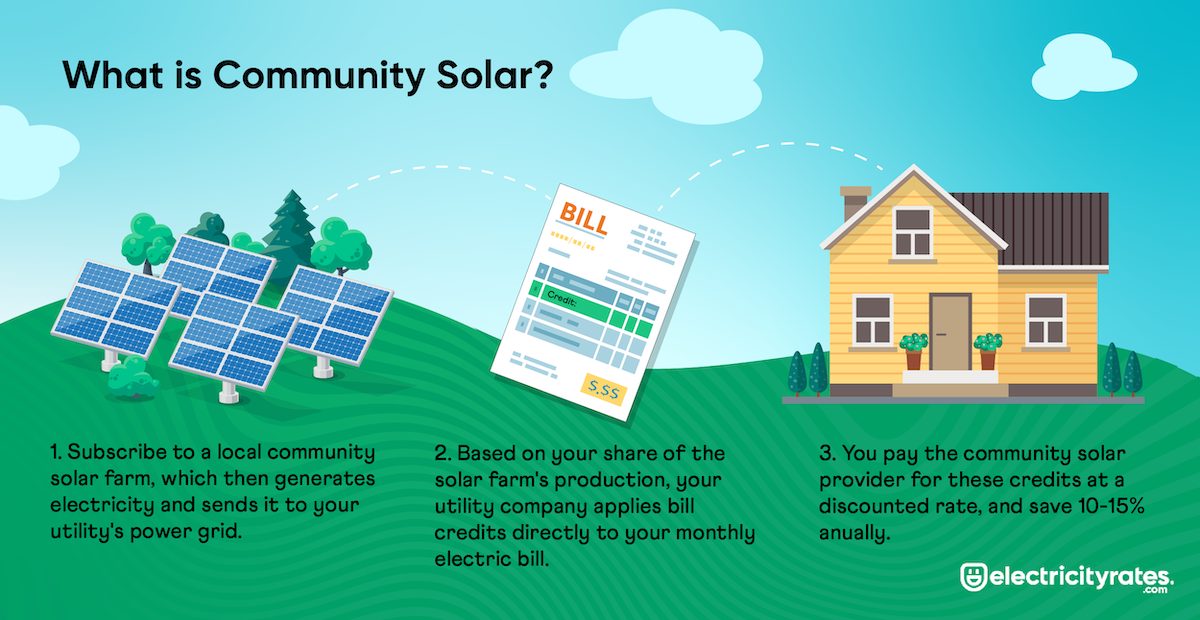
Here’s How the Solstice Process Typically Works
- Check availability: Community solar availability depends on your state, utility territory, household eligibility, and whether a local solar farm has open capacity.
- Connect your electric account: Solstice uses your electric account or a recent utility bill to estimate your annual electricity usage. This helps Solstice match you to a solar farm share that fits your home or business.
- Subscribe to a local solar farm: If an eligible project is available, Solstice reserves a share in that community solar farm for you. There is no rooftop installation, no equipment purchase, and no change to the wires that deliver electricity to your home.
- Keep getting power as usual: Your utility still delivers your electricity, maintains the grid, and handles outages. Your lights, appliances, and service reliability remain unchanged. The difference is that more clean energy is being added to the grid on your behalf.
- Earn solar bill credits: Each month your share of the solar farm produces energy, you earn credits that reduce your utility bill. These credits are based on the output of your assigned solar share.
- Pay for those credits at a discount: You pay Solstice for the credits you receive, but at a discounted rate. The difference between the full value of the credits and the amount you pay Solstice creates your savings.
For example, if your solar credits are worth $100 and your Solstice discount is 20%, you would pay $80 for those credits and net $20 in savings. Actual savings vary by state, utility, project, and program rules.

Solar Power Without the Panels
Enroll in minutes!
Access the benefits of a nearby solar farm—guaranteed discounts and clean energy—all through your existing utility bill. It’s the easiest way to go solar!
Does Solstice Serve Your State?
Solstice currently promotes community solar programs in Illinois, Massachusetts, Minnesota, New Jersey, New Mexico, New York, and Virginia.
Solstice’s site also lists different potential savings rates by state. These state-level savings estimates can vary widely because each community solar market has its own rules, credit values, and utility billing structure.
If Solstice does not currently have an open solar farm in your area, you may be placed on a waitlist or asked to check back later. Community solar is expanding, but it is still governed state by state.
How Billing Works with Solstice Community Solar
Community solar billing is usually the biggest question for new subscribers. The good news is that the concept is simple once you understand the two main pieces.
First, your utility bill shows the electricity you used and the solar credits you earned. These solar credits reduce the amount you owe your utility, saving you 5-15% annually. Second, you pay Solstice for those solar credits at a discounted rate. Because you pay less than the credits are worth, you save money overall.
Depending on your state and utility, you may see community solar charges in one of two ways:
1. Two-bill model
In many markets, you receive your regular utility bill with solar credits applied, and then a separate Solstice bill for those credits at the discounted rate.
2. Consolidated billing model
In some markets, the solar credit and subscription charge may be included through the utility bill. This can make billing easier because everything appears in one place. Either way, the goal is the same: your solar credits should be worth more than what you pay for them.
For example, if you earned $100 credit discount off of your utility bill, you will pay your community solar provider for 90% of that, or $90. Solstice passes along that money to the solar farm owner, and you net out with $10 savings, just not during the same month.
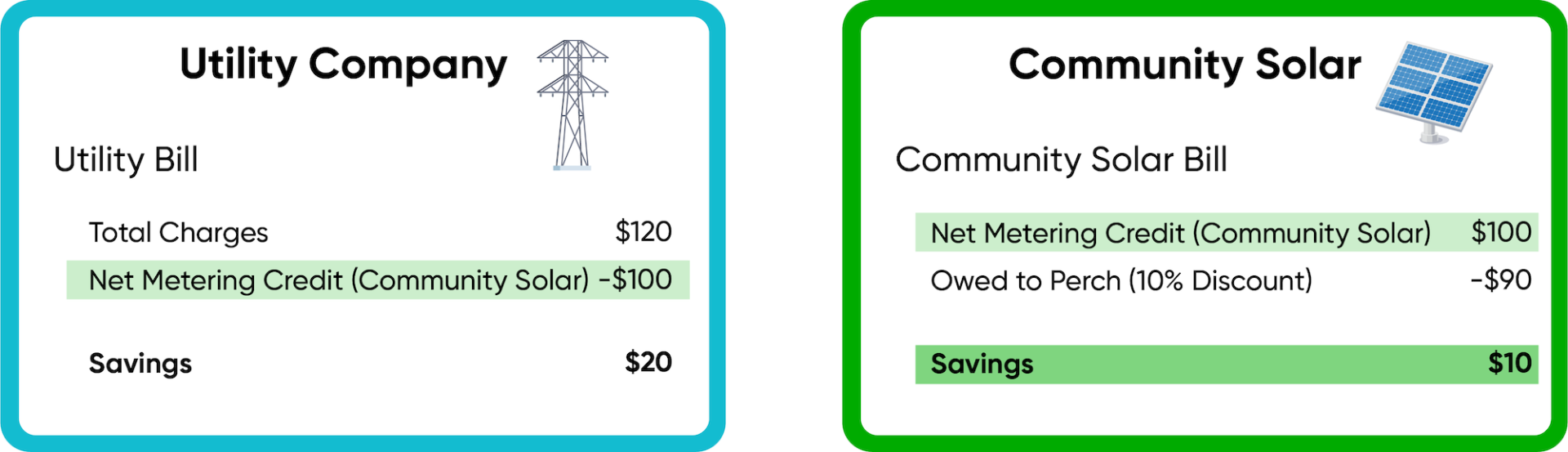
This example bill scenario is for a resident on a 10% savings project. Savings rates will vary by state and eligibility factors.
And if you want to maximize your total savings, you can pair Solstice’s community solar plan with a low fixed-rate electricity plan from a leading provider. Compare rates and options directly on ElectricityRates.com to see how much more you can save by bundling both.
A few billing details to keep in mind:
- Solar credits may take a few billing cycles to appear after enrollment.
- If your solar farm is still under construction, savings begin after the project goes live.
- Monthly credits can fluctuate based on weather, sunlight, and seasonal solar production.
- If your solar share produces more credits than you need in a given month, unused credits may roll over depending on local program rules.
- You still pay standard utility charges that are not offset by solar credits, such as delivery charges, taxes, or certain fixed fees.
With Solstice there is no cost to join, no equipment to install, and no cancellation fee. As always, review the exact terms for your state and project before enrolling.
How Solstice Helps Reduce Environmental Impact
Community solar gives more people a practical way to support renewable energy.
Rooftop solar can be a strong long-term investment for some homeowners. But it is not realistic for everyone. Renters, condo owners, homeowners with shaded roofs, and customers who do not want a major installation project may all be locked out of traditional solar.
Solstice helps close that gap by connecting more customers to local solar farms.
When you subscribe, your home is not directly powered by a private set of panels. Instead, your share of a solar farm adds clean electricity to the grid. This helps reduce reliance on fossil fuel generation over time and supports the development of more renewable energy in your region.
Solstice’s broader mission is also focused on energy equity. The company has emphasized expanding access to clean energy for low- to moderate-income households, nonprofits, small businesses, and communities that have historically had fewer opportunities to participate in solar programs.
That means the environmental benefit is not just about emissions. It’s also about making the clean energy transition more accessible to more people.
How to Combine Community Solar with a REP Plan
One of the best ways to maximize electricity savings is to understand how community solar works alongside your electricity supply plan.
In deregulated energy markets, you may be able to choose a Retail Electric Provider, or REP, for your electricity supply. Your utility still delivers the power, but your REP sets the supply rate you pay.
Community solar can often work in conjunction with a REP plan. That means you may be able to:
- Choose a competitive electricity supply rate from a REP
- Subscribe to a Solstice community solar farm
- Receive solar credits through your utility bill
- Pay for those credits at a discount
- Stack both savings opportunities where program rules allow
Here’s a simple way to think about it:
Your REP plan helps determine what you pay for electricity supply. Your Solstice community solar program subscription helps reduce your bill through discounted solar credits. Used together, they may help lower your total electricity cost more than either option alone.
Before enrolling, make sure to check:
- Whether your state allows retail energy choice
- Whether your utility supports community solar credits
- Whether your chosen REP plan works with community solar billing
- Whether your REP contract includes cancellation fees, variable rates, or renewal terms
- Whether the Solstice project has open capacity in your utility territory
Why Should You Consider Solstice Community Solar?
If you’re skeptical, that’s totally fair. The internet’s full of flashy promises, and when it comes to your electricity bill, trust is everything.
Solstice is an established, mission-driven clean energy company originally founded in Massachusetts with deep partnerships across multiple state solar programs. They are a BBB-accredited business and a certified B Corporation, meaning they are legally committed to balancing purpose and profit. All data and customer communications are securely encrypted, and their dedicated customer success team is always happy to help at support@solstice.us or 845-853-0768.
Plus, Solstice reviews from verified customers consistently highlight:
- Reliable monthly savings
- Clear communication and billing transparency
- Seamless setup and account management
Solstice is helping over 45,000 homeowners, renters, and businesses save on electricity while investing in America’s renewable future. Many Solstice Community Solar reviews mention that the sign-up process takes just minutes, savings are easy to track through their online platform, and customer support is incredibly responsive and friendly.
Customers across states like New York, Massachusetts, New Jersey, and Minnesota have reported consistent bill discounts of roughly 10%, while local businesses appreciate the sustainability boost that comes with being able to say, “We’re powered by local solar.” Head over to our community solar page if you’d like to explore more information about community solar programs.
Solstice Community Solar FAQ's
-
No. Solstice Community Solar does not require rooftop panels, equipment installation, or changes to your property. You subscribe to a share of an off-site solar farm instead.
-
Yes. Your utility still delivers electricity to your home, maintains the poles and wires, and handles outages. Community solar simply adds solar credits to your bill based on your share of a local solar farm.
-
Yes, renters may be eligible if they live in a participating state and utility territory. Community solar is designed to make solar access easier for renters and people who cannot install panels.
-
Savings vary by state, utility, project, and solar credit discount. Solstice lists different potential savings rates by state, and your exact offer should be reviewed before you enroll.