The browser you are using is not supported. Please consider using a modern browser.


Your Guide to Community Solar Programs in Illinois

Key Takeaways
- Community solar programs in Illinois allows both renters and homeowners to subscribe to a share of a local solar farm's energy, requiring no installation, upfront costs, or equipment maintenance.
- Subscribers receive bill credits on their utility bill and pay their community solar provider for those credits at a discounted rate, typically saving 10% to 20% off the supply portion of their electric bill.
- It is available to customers of major utilities like ComEd and Ameren and offers flexible terms, allowing subscribers to generally unsubscribe with little or no penalty.
- Community solar adds renewable energy to the grid, helping Illinois advance its clean energy goals under legislation like the Climate and Equitable Jobs Act (CEJA).
Table of Contents

Community solar in Illinois is growing fast, giving residents an easy, accessible way to support renewable energy while lowering monthly electricity costs. And the best part? You don’t need to own your home, install solar panels, or make a long-term commitment to start benefiting from clean, local solar energy.
This guide walks you through everything you need to know about community solar programs in Illinois, including how they work, why they’re important, how households save money, and how to compare providers near you.
What is Community Solar in Illinois?
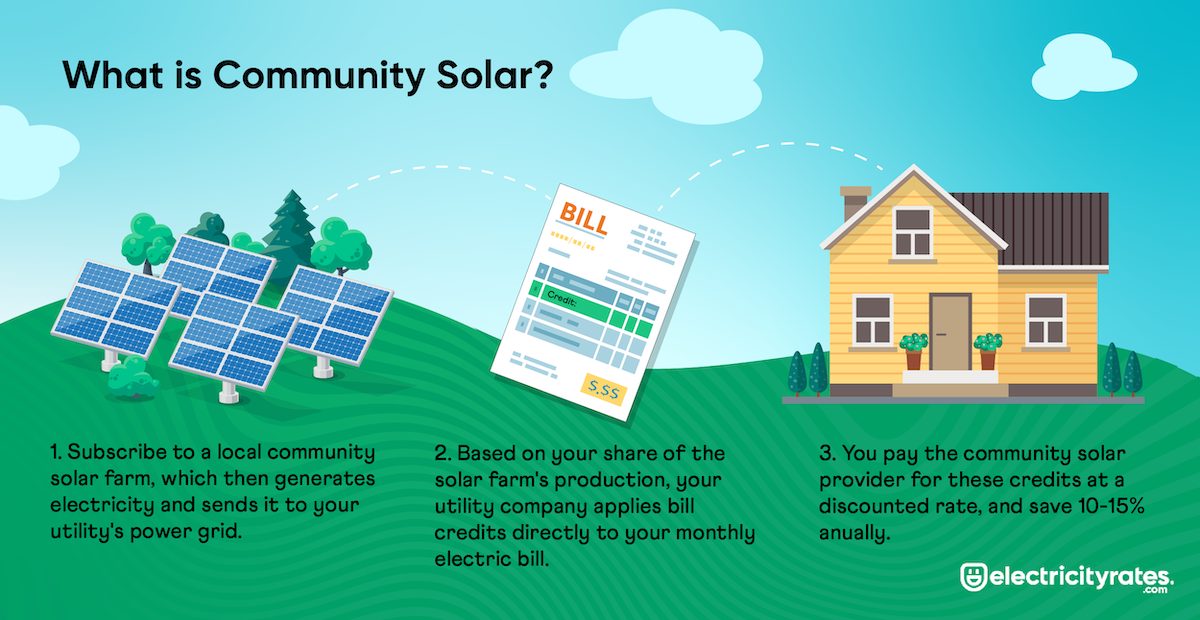
Community solar allows Illinois residents to subscribe to energy produced by a local solar farm. Instead of installing panels on your roof, you “claim” a portion of a shared solar array built somewhere else in the state. As the solar farm produces electricity, you earn bill credits that reduce the supply portion of your electric bill.
Illinois community solar programs enable participants to enjoy the benefits of solar energy, including lower utility bills and a reduced environmental impact, without the upfront costs and maintenance associated with rooftop installations.Community solar works with major utilities like ComEd and Ameren Illinois, making it widely available across the state.
What are the Benefits of Community Solar?
-
Guaranteed Savings
Most community solar programs in Illinois offer 10–20% savings on the solar bill credits you receive each month—no maintenance costs, no installation fees, no guesswork.
-
Open to Renters and Homeowners
Whether you live in a single-family house, an apartment, or a condo, you can subscribe as long as your address falls within the service area of a participating solar project.
-
No Rooftop Panels
No construction, roof inspections, or long-term investment required. Everything operates remotely, and you can unsubscribe with little or no penalty depending on the provider.
History of Community Solar in Illinois
Community solar in Illinois began gaining traction after the 2016 passage of the Future Energy Jobs Act (FEJA), which created incentives for renewable energy developers. This law led to the state’s first wave of community solar projects.
Then in 2021, the Climate and Equitable Jobs Act (CEJA) expanded funding and long-term support for renewables, unlocking a second, much larger wave of community solar construction. CEJA also prioritized equitable access, reserving a portion of community solar capacity for low-income and environmental justice communities.
Today, Illinois is considered a national leader in community solar deployment, with more projects under development and waitlists opening regularly.
Quick Facts about Community Solar in Illinois
Here are a few standout data points showing how impactful community solar has become in the state:
- Illinois is among the top 5 fastest-growing community solar markets in the U.S., thanks to strong incentives under the Climate and Equitable Jobs Act (CEJA).
- More than 12,000 Illinois households are already subscribed to community solar projects statewide.
- Community solar projects in Illinois have helped avoid tens of thousands of metric tons of CO₂ emissions annually, equivalent to removing thousands of cars from the road.
- The state has awarded enough project capacity to support hundreds of megawatts of new community solar development, with more projects launching each year.
How Much Can I Save by Joining an Illinois Community Solar Program?
Savings depend on your provider, utility, and subscription type, but most Illinois households save 10%–20% off the supply portion of their electricity bill, though as much as 50% is possible if you qualify for the income-based Illinois Solar for All program.

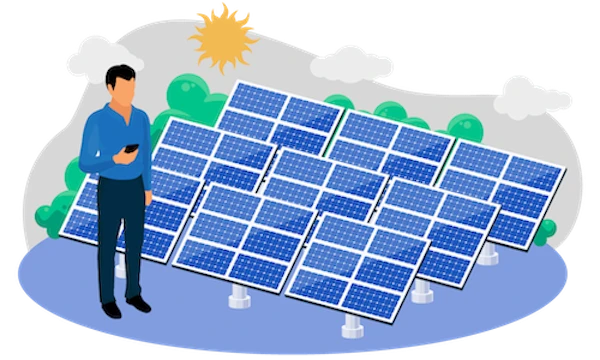
Solar Power Without the Panels
Access the benefits of a nearby solar farm—guaranteed discounts and clean energy—all through your existing utility bill. It’s the easiest way to go solar!
How to Know if Community Solar Is Right for You
Deciding if community solar is the right choice involves considering several factors. If you live in Illinois and lack a suitable roof for solar panels, or if you’re a renter, community solar offers a practical solution to participate in renewable energy. It’s also worth considering if you’re looking for ways to lower your electricity bills while supporting local renewable energy projects. Comparing IL community solar providers and plans is necessary to find the best fit for your energy needs and financial goals.
What Is the Difference Between Community Solar and Green Energy Plans?
While both community solar and green energy plans aim to increase the use of renewable resources, there are key differences. Community Solar in Illinois focuses on sharing the output of a local solar farm among community members, directly connecting consumers with their energy source. Green energy plans, on the other hand, may source electricity from a variety of renewable sources, which may not necessarily support local jobs or energy independence.
What is the Difference Between Community Solar and Rooftop?
Rooftop solar systems require homeownership and a significant upfront investment. They offer personal energy production and the potential for increased property value. In contrast, community solar is an accessible alternative that doesn’t require property ownership, upfront costs, or suitable roofing conditions. It is more inclusive and appeals to a broader range of people.
With community solar, participants share the energy production, contributing to sustainability without the logistical and financial commitments of rooftop installations. The decision between the two options depends on individual circumstances, such as financial readiness, property suitability, and personal preferences for energy independence or community participation. Both choices promise to use renewable energy but cater to different needs.
How to Sign Up for Community Solar in Illinois
Sign Up in a Few Easy Steps
1. Check Your Eligibility: Make sure you live in the ComEd or Ameren service territory. These utilities currently support the broadest range of community solar options.
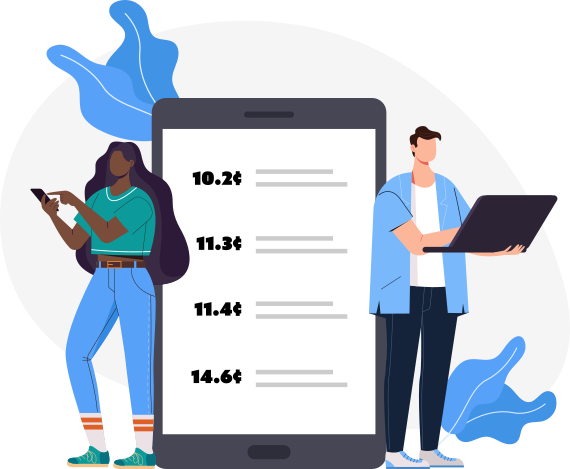
2. Compare Available Providers: Providers vary in savings rates, subscription terms, and project availability.
3. Enroll Online: Most providers offer quick sign-ups requiring your utility account number, basic contact information, and payment method for your discounted solar credits.
4. Wait for Project Activation: If a solar farm is already generating electricity, you may begin receiving credits within 1-3 months.
5. Start Receiving Monthly Savings: Once active, your utility bill will show your solar credits, and your provider will send a separate solar credit invoice each month.
Community Solar Providers in Illinois
Illinois residents have multiple reputable community solar providers to choose from. Here are two of the largest:
Arcadia
Arcadia brightens the community solar landscape with equal access to clean energy. They democratize the benefits of solar power, allowing renters, homeowners, and business owners alike to tap into solar farms without on-site installation. Their model focuses on sustainability and offers noticeable savings on electricity bills through clean energy credits.
Currently, Arcadia provides community solar programs in Colorado, Delaware, Illinois, Maine, Maryland, Massachusetts, Minnesota, New Jersey, New Mexico, New York, Oregon, Rhode Island, Virginia and Washington D.C..
Nexamp
Founded in 2007 by two U.S. Army veterans, Nexamp has grown from a solar installer into a leading community solar company. Its mission is to make clean energy affordable and accessible by developing and operating large-scale solar farms.
Nexamp has a growing national footprint, with projects and service areas across the United States. They have a particularly strong presence in the Northeast, including Massachusetts, Rhode Island, and New York, but have expanded into other states like Illinois and Maryland, with new projects and markets continually in development.
What to Expect With Your New Solar Bills
When you join a community solar program in Illinois, your billing will work differently from a standard electricity account:
You will receive two bills, your normal electric bill (from ComEd or Ameren) which will include your earned solar credits, reducing the supply charges for that month. You will also receive a community solar bill (from your provider). This bill charges you for the discounted solar credits—typically 10–20% less than their value on your utility bill.
Your total cost between both bills will be lower than what you would have paid without community solar.
Some providers offer consolidated billing, meaning everything appears on one bill. Illinois is expanding support for this option over time.
For example if you earned $100 credit discount off of your April utility bill, you will pay your community solar provider for 90% of that, or $90 in June. The community solar provider passes along that money to the solar farm owner and you net out with $10 savings just not during the same month.
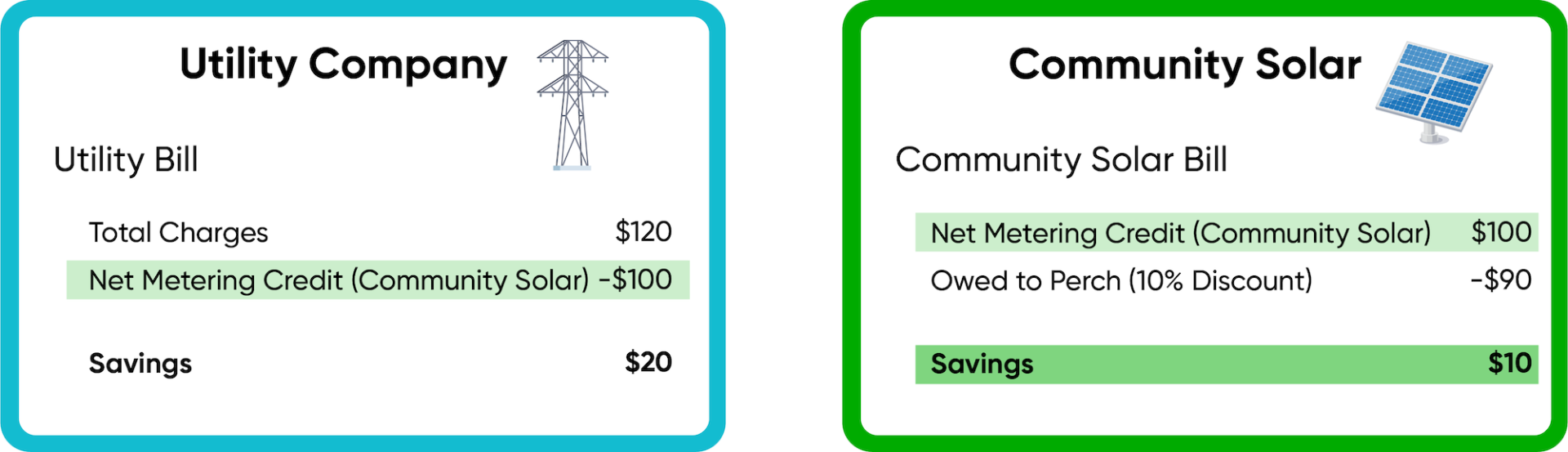
This example bill scenario is for a resident on a 10% savings project. Savings rates will vary by state and eligibility factors.
In most states, you will pay your community solar provider 1-3 months after your utility bill. In certain states, payment will happen directly through your utility bill. So check your contract for these state-specific details.
How to Find and Compare Community Solar Near You
Comparing Illinois community solar options is the best way to maximize your savings. Here’s how to get started:
- Visit ElectricityRates.com: Use our community solar guides to explore providers, compare offers, and understand the fine print.
- Look for Key Features: Including savings rate (10–20% is typical), contract length, and billing structure (two bills vs. consolidated)
- Sign Up for Available Projects: Some areas have immediate availability, while others operate on a waitlist. Joining a waitlist is free and places you in line for the next open project.
Community Solar Makes Going Green Easier Than Ever
The Illinois community solar program is one of the most accessible ways for residents to reduce their electricity costs while directly supporting renewable energy. Whether you rent, own, or plan to relocate in the near future, community solar offers guaranteed savings with no equipment, no installation, and no upfront cost. If you’re ready to explore your options, ElectricityRates.com is here to help you compare top providers and find the best community solar program near your home.
You can also pair community solar with the most affordable electricity rate available using ElectricityRates.com’s comparison tools or familiarize yourself with the electricity landscape in Illinois–both smart ways to maximize your total monthly savings! Explore additional energy-efficiency resources on our site to further lower your household’s energy use and keep more money in your pocket.
Illinois Community Solar FAQs
-
No. Community solar in Illinois doesn’t require rooftop panels or any equipment on your home. You simply subscribe to a share of a local solar farm and receive credits on your utility bill based on the energy it produces.
-
Yes. Renters, condo owners, and homeowners can all participate as long as they have an individual electricity account with ComEd or Ameren and live within the service area of an eligible project.
-
Most residents save 10 – 20% on the value of their monthly solar bill credits. Savings depend on your providers and usage, but there are no installation costs or upfront fees, so every dollar saved goes directly to your household.
-
If you move within the same utility territory, you can usually transfer your subscription to your new address. If you move outside the service area, most providers allow you to cancel with little or no penalty, depending on the provider’s terms.