The browser you are using is not supported. Please consider using a modern browser.


Your Guide to Appalachian Power

Key Takeaways
- Appalachian Power serves Virginia customers as part of the American Electric Power system, primarily in the western and southwestern parts of the state.
- A typical Appalachian Power Virginia residential customer using 1,000 kWh per month currently pays about $170.63, though your actual bill depends on usage, rate plan, riders, weather, and home efficiency.
- Appalachian Power bill assistance may be available through federal, state, and utility-level programs, including LIHEAP, Virginia Energy Assistance, PIPP, payment arrangements, and Neighbor to Neighbor.
- Appalachian Power energy rebates, free efficiency kits, shared solar, and net metering options can help Virginia customers lower usage, support renewable energy, or both.
Table of Contents

Appalachian Power is an electric utility serving customers in Virginia, West Virginia, and Tennessee. In Virginia, the company is part of American Electric Power, one of the largest electric utility systems in the United States.
For many households in Appalachian Power territory, this utility is responsible for delivering electricity, maintaining local power lines, restoring outages, reading meters, and billing customers. That makes it different from a competitive electricity supplier in states where residents can shop for a separate electricity supply plan.
Current Appalachian Power Electricity Rates
Appalachian Power electricity rates in Virginia are regulated and can change over time due to fuel costs, grid investments, transmission costs, approved riders, energy efficiency programs, and other charges reviewed by state regulators.
As of Appalachian Power’s current Virginia rate information, a residential customer using 1,000 kWh per month would pay about $170.63. A customer using 2,000 kWh would pay about $333.30. That works out to roughly 17.06 cents per kWh for the 1,000 kWh example, but that does not mean every customer pays the exact same amount per kWh.
Your actual Appalachian Power bill may be higher or lower depending on:
- How much electricity your household uses
- Whether your home uses electric heat
- Seasonal weather patterns
- Your rate schedule
- Approved riders and adjustment clauses
- Taxes and local fees
- Participation in special rate plans or programs
Appalachian Power also offers voluntary rate plans for some Virginia customers with smart meters, including Smart Time of Use and Smart Demand options. These plans are designed for customers who may be able to shift more of their electricity use to lower-cost off-peak hours. They may not be the right fit for every household, but they can be worth reviewing if you have flexible energy habits, an electric vehicle, or appliances you can run outside peak periods.
Understanding Your Appalachian Power Bill
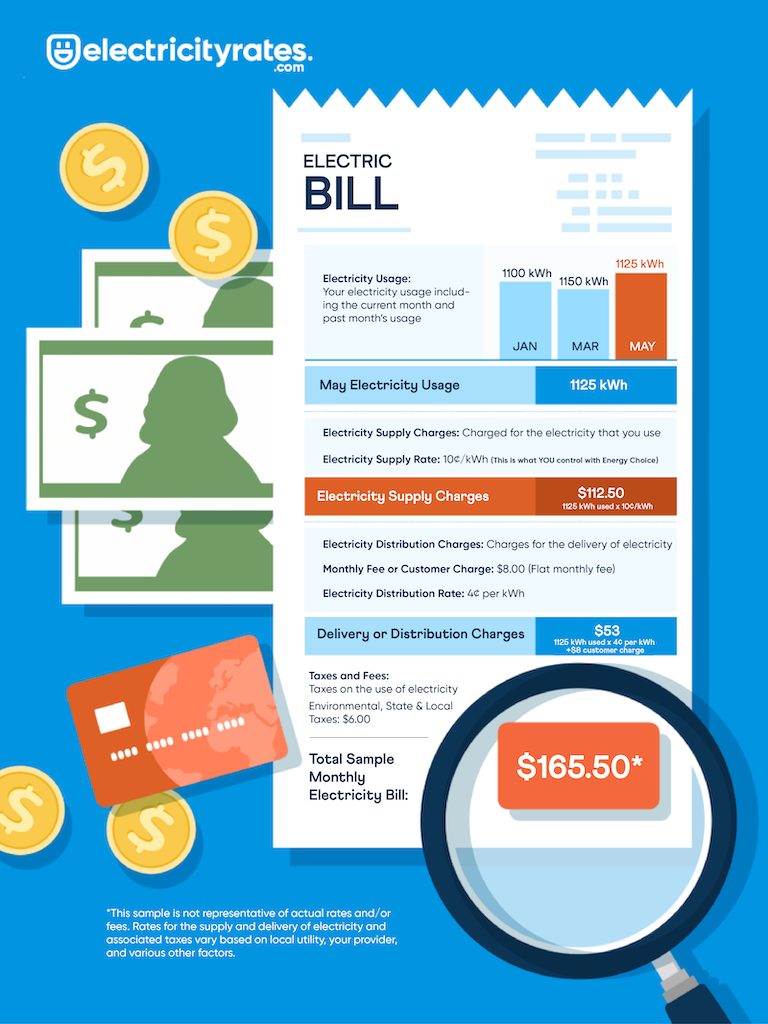
Your Appalachian Power bill is more than a single electricity rate multiplied by your usage. It is a combination of usage, delivery charges, supply-related charges, riders, taxes, and fees.
Here are the main pieces to understand:
- Usage: Your usage is measured in kilowatt-hours, or kWh. One kWh equals the amount of energy used by a 1,000-watt appliance running for one hour. The more electricity your home uses, the higher your bill is likely to be.
- Supply: Appalachian Power describes supply charges as the cost of producing and transmitting your electricity. This includes the electricity generated or purchased to serve customers and the transmission systems that move power across the broader grid.
- Delivery: Delivery charges cover the cost of bringing electricity to your home or business through local poles, wires, substations, and related equipment. Even if you use less electricity, utilities still have fixed costs to maintain a safe and reliable delivery system.
- Taxes and fees: Your bill may also include pass-through charges from local governments or other approved fees. These can vary by location.
- Usage history: One of the most useful parts of your bill is the usage history chart. Compare your current month to the same month last year, especially during very hot or cold weather. If your bill jumps, the cause may be higher usage rather than a rate change.
For many Virginia households, heating and cooling are the biggest drivers of electricity use. If you have electric heat, a heat pump, central air conditioning, or older appliances, small efficiency changes can make a noticeable difference in your electricity bill over time.
Appalachian Power Assistance Programs
If you are struggling to pay your Appalachian Power bill, contact the utility as soon as possible. Waiting until you receive a disconnection notice can limit your options.
Appalachian Power customers in Virginia may be able to access several types of help at the federal, state, and utility levels.
Payment Extensions and Arrangements
If you need a little more time to pay, Appalachian Power may offer a payment extension. If you need to spread out a past-due balance, an extended payment arrangement may allow you to pay over time.
Average Monthly Payment Plan
Appalachian Power’s Average Monthly Payment (AMP) plan can help smooth out seasonal bill spikes by averaging your payments across the year. This does not erase usage costs, but it may make monthly budgeting easier.
Virginia Energy Assistance Program
Virginia’s Energy Assistance Program helps eligible households with heating costs, cooling costs, energy emergencies, and weatherization. Assistance may include help with utility bills, deposits, equipment repair, or energy efficiency improvements, depending on the program component and application window.
LIHEAP
The Low Income Home Energy Assistance Program is a federally funded program that helps income-qualified households manage energy costs. Virginia customers typically apply through their local social services agency or CommonHelp.
PIPP
Virginia’s Percentage of Income Payment Program helps eligible Appalachian Power customers manage electric bills based on household income. It can also help forgive past-due balances when customers make required payments on time.
Neighbor to Neighbor
Appalachian Power partners with Dollar Energy Fund to offer Neighbor to Neighbor bill pay assistance. Grants are applied directly to eligible customer accounts to help prevent disconnection or restore electric service.
Medical Certification and Life Support Programs
Virginia customers with a serious medical condition or life-support equipment in the household may be eligible for additional account handling options. These programs do not eliminate the responsibility to pay the bill or guarantee priority restoration during outages, but they can provide important protections and communication support.
Appalachian Power Efficiency Rebates
Appalachian Power energy rebates for Virginia customers are offered through TakeCharge VA, the utility’s energy efficiency program hub. These rebates and discounts are designed to help customers reduce electricity use, improve comfort, and lower long-term energy costs.
Current TakeCharge VA rebate categories include:
ENERGY STAR Appliance Rebates
Customers may be eligible for rebates on qualifying energy-efficient products. Examples include up to $700 for an ENERGY STAR central air conditioner, up to $400 for a heat pump water heater, and up to $50 for certain ENERGY STAR air purifiers.
Home Performance Program
Appalachian Power’s Home Performance Program starts with a home energy assessment. Customers receive a report with recommended energy-saving improvements. Eligible upgrades may include rebates of up to $2,000 for attic insulation or $400 per unit for ductless mini-split heat pumps. Some rebates require the use of an approved contractor.
Free Energy Efficiency Kits
Virginia residential customers may be eligible for a free energy efficiency kit through TakeCharge VA. These kits can include products that help reduce everyday electricity use.
Business Rebates
Appalachian Power also offers energy efficiency incentives for businesses, including certain lighting, HVAC, refrigeration, kitchen equipment, air compressor, and variable frequency drive upgrades.
Virginia residents should also keep an eye on state-administered home energy rebate programs. Virginia Energy has noted that federal Home Energy Rebate programs are expected to support home efficiency and electrification upgrades, but final access details and launch timing have not been fully established. Until those programs are available, customers should focus on current utility rebates, federal tax credits, weatherization support, and existing state resources.
Virginia’s Clean Energy Future
Virginia’s energy mix is changing. The Virginia Clean Economy Act requires Appalachian Power to file plans with regulators showing how it will meet long-term clean energy goals, including a path toward 100% carbon-free electricity by 2050.
For customers, that clean energy transition may show up in several ways: more renewable energy projects, more grid investment, expanded efficiency programs, and new solar options. It can also affect costs over time, which is why it is important to understand both the opportunities and the tradeoffs.
Community Solar Options in Virginia
Community solar allows customers to support solar energy without installing panels on their own property. Instead of buying rooftop equipment, customers subscribe to a share of a larger solar project and receive bill credits tied to their portion of the project’s output.
The Appalachian Power shared solar program allows eligible retail customers to purchase subscriptions to qualifying shared solar facilities. These projects must be connected to Appalachian Power’s distribution system in Virginia and meet specific program rules.
Shared solar can be especially appealing for renters, condo owners, homeowners with shaded roofs, or anyone who wants access to solar without making a major upfront investment. However, it is important to read the subscription terms closely. Look for details such as contract length, cancellation rules, expected savings, billing structure, and whether credits can exceed your typical annual bill.
Customers participating in Appalachian Power’s shared solar program may not simultaneously participate in PIPP or net metering, so compare your options before enrolling.
On-Site Renewable Energy, Solar Panels, and Net Metering
If you own your home and your roof is a good fit, rooftop solar panels may be another option. Net metering allows eligible customers with on-site renewable generation, such as solar panels, to offset part of their electricity use with energy produced at home.
Before installing solar panels, Appalachian Power customers should:
- Review Virginia net metering rules
- Check Appalachian Power interconnection requirements
- Get multiple quotes from qualified solar contractors
- Ask how much of your bill solar can realistically offset
- Understand any remaining utility charges
- Confirm whether your system size is eligible for net metering
- Consider roof age, shading, home efficiency, and long-term plans
Solar can be a smart investment for some households, but it is not one-size-fits-all. The best first step is often to reduce your energy usage through efficiency upgrades, then to size a solar system around your lower energy needs.
Appalachian Power Contact Information
- Official website
- Main customer service number is: 800-956-4237
For emergencies and safety hazards, Appalachian Power instructs customers to call immediately. You can also report outages online, check the outage map and manage many account tasks through Appalachian Power’s website.