The browser you are using is not supported. Please consider using a modern browser.


Maryland Governor Dedicates $17M for Community Solar Grant Program

Key Takeaways
- Maryland is investing $17 million in a new Maryland community solar grant program focused on helping low-income residents lower their electricity bills.
- Many of these MD community solar projects will be built on landfills and brownfields, turning unused land into clean energy for local communities.
- With Senate Bill 1 (SB1) limiting specific traditional Energy Choice options, community solar has become a powerful way for Marylanders to reduce electricity rates while going green.
- Maryland homeowners, renters, and small businesses can save more by both comparing MD electricity rates on ElectricityRates.com and subscribing to qualifying community solar programs when available.
Table of Contents

From Annapolis to Baltimore to Frederick Maryland residents across the state are feeling the impact of high electricity bills. Maryland electricity rates are consistently among the top third in the USA, with residential customers paying around 17.9–19.9 cents per kilowatt-hour (kWh) and average monthly bills near $166.
Now here’s the good news: Governor Wes Moore just announced $17 million in new grants to expand Maryland community solar projects, with a big focus on relief for low-income households and building solar farms on landfills and brownfields.
Today, we break down what this means for your MD electricity rates, how Senate Bill 1 (SB1) changed your Energy Choice options, and why MD community solar might be the easiest way to cut your bill and support clean energy—no rooftop panels, no contractor, no problem.
Quick refresher: What is Maryland community solar?
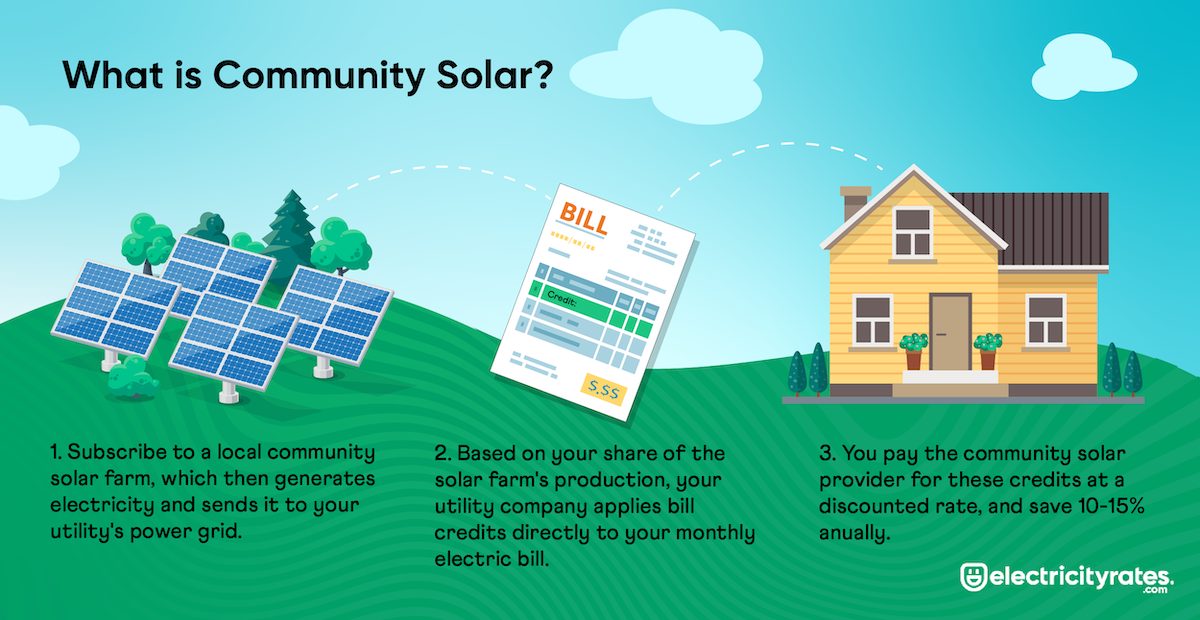
Think of Maryland community solar as a shared solar farm for your neighborhood:
- A solar developer builds a solar farm somewhere in your utility territory (BGE, Pepco, Delmarva, Potomac Edison, SMECO, etc.).
- You subscribe to a slice of that farm.
- The power goes to the grid, and you get credits on your electric bill based on your share.
No rooftop or panel installation required. Renters, condo owners, and folks with shady trees can all join in.
Maryland’s Community Solar LMI-PPA Grant Program provides funding to community solar subscriber organizations to enable them to sign long-term power purchase agreements and offer clean energy to low-income households at lower costs.
So if you’ve ever thought, “Solar would be nice, but my roof disagrees,” MD community solar is your workaround.
The new Maryland solar grant: $17M aimed at low-income families
Here’s what’s got everyone more excited than a good ol’ fashioned blue crab cake:
- Governor Wes Moore announced $17 million in grants through the Community Solar LMI-PPA Grant Program to help more income-qualified Marylanders join community solar.
- The money comes from the state’s Strategic Energy Investment Fund, using solar compliance payments from utilities and suppliers.
The Maryland Energy Administration describes the Community Solar LMI-PPA Grant Program as a statewide, competitive program.
Who can benefit from this MD solar program?
The program is low-income focused from top to bottom:
- The grants help developers lower their costs so they can pass real savings to subscribers.
- Low-income households across the state (especially those in DHS or other qualifying programs).
- Renters who can’t put panels on their roof.
- Homeowners with shady roofs, HOA restrictions, or old roofs they don’t want to touch.
- Small businesses may be able to subscribe to specific community solar projects (depending on program rules and project design).
Translation: you’ll see new community solar farms popping up in multiple parts of the state over the next few years, specifically designed to lower MD electricity rates for residents who need it most.
For projects on landfills and brownfields (the big goal of this round):
- Roughly $12 million of the total will go to these sites.
- 100% of the output must go to low-income Marylanders.
- Half of the energy is provided at no cost to certain low-income households identified by the Maryland Department of Human Services.
- The other half goes to low-income subscribers at about 25% off their utility’s residential rate.
For Maryland solar projects not on landfills or brownfields:
- At least 15% of the electricity must go to low-income subscribers.
- Projects must deliver a minimum savings of 12%, and many customers end up saving more than 20% on their electricity costs.
In other words, this Maryland solar grant is not just a green ribbon-cutting. It’s engineered to cut MD electricity rates for families who feel every bump on their utility bills.
Why this matters: Maryland electricity rates are no joke
Maryland is a beautiful state, but it is quickly becoming more and more expensive just to keep the lights on. Residential customers pay around 19.87 cents per kWh, compared to about 17.62 cents per kWh nationally. That puts the average monthly electric bill at roughly $165–$175 in Maryland.
Some reports indicate that energy prices in Maryland have risen faster than in neighboring Virginia, with Maryland reaching approximately 19.87 cents per kWh by August 2025. So if your bill feels more like a Ravens ticket VIP package than a utility charge, you’re not alone. Community solar gives you a way to lower your Maryland energy rates without moving, downsizing, or swearing off air conditioning during August on the Bay.


Harness the Power of the Sun Without Panels
ENROLL IN 5 MINUTES! Access the benefits of a nearby solar farm—guaranteed discounts and clean energy—all through your existing utility bill. It’s the easiest way to go solar!
SB1 changed Energy Choice in Maryland – here’s the simple version
Maryland has long been an Energy Choice state with the goal of market competition keeping prices in check. That means you can pick a retail electricity supplier instead of just sticking with the utility’s Standard Offer Service (SOS).
But some third-party energy suppliers were charging much higher prices than the utility rate, and thousands of customers ended up paying more than they should have. In response, lawmakers passed Senate Bill 1 (SB1) to tighten the rules.
According to the Maryland Public Service Commission’s MD Electric Choice site, SB1:
- Puts price caps on new or renewed residential electric and gas contracts beginning January 1, 2025, based on the trailing 12-month average SOS rate.
- Limits contract terms with retail suppliers to 12 months.
- Requires energy suppliers and salespeople to meet new training and licensing standards.
- Sets caps on how much energy suppliers can charge for “green” or “clean” power offers compared to SOS.
- Ends the old purchase-of-receivables (POR) setup, which means suppliers may need to issue separate invoices instead of everything appearing on your utility bill.
Because of these changes, some suppliers have simply left the Maryland market, and the PSC notes you may now see fewer offers on the official MD Electric Choice website.
So Energy Choice in Maryland isn’t dead, but it’s more tightly regulated as there are now fewer suppliers, shorter contracts, caps on what they can charge vs. the utility, and extra friction if you’re juggling two bills.
That’s where Maryland community solar shines. When retail options shrink, community solar will likely become a bigger, more stable way to lower your MD energy rates while still going green.
How community solar savings work on your bill
Here’s what joining an MD community solar project usually looks like in practice:
- You sign up with a community solar provider tied to your utility territory.
- The provider assigns you a share of a solar farm (often sized to match your annual usage).
- The solar farm sends power to the grid.
- You receive credits on your electricity bill for your share of the farm’s production.
- You pay the community solar provider for those credits at a discount.
With this new Maryland solar grant, low-income households on the DHS lists will get a portion of energy for free, which should directly reduce their bills. While other low-income subscribers may receive guaranteed discounts of 12–25% off their utility rates, with typical savings above 20%. You’re basically swapping part of your regular bill for discounted solar credits—and the state is kicking in money behind the scenes so the numbers pencil out.
Why landfills and brownfields are the new solar hot spots
One of the most innovative aspects of this grant program is where many of the new projects will be located. The state is prioritizing landfills and brownfields, with about $12 million from the grant allocated to community solar farms on these sites.
- Landfills and brownfields often can’t be used for homes, schools, or shops.
- They’re already cleared and often close to existing power infrastructure.
- Turning “waste” land into energy hubs is a win for environmental justice, especially when the power goes to low-income communities.
Maryland is already a quiet leader here:
- In Annapolis, an 18-MW solar farm built on a closed landfill now produces about 24 GWh of electricity per year, helping power the city and Anne Arundel County.
- Another project in Fort Washington turned a former landfill into one of Maryland’s first large-scale solar farms, serving around 1,200 homes through community solar subscriptions.
- A national analysis found that U.S. landfills could host over 60 GW of solar, nearly doubling federal community solar targets.
So when you hear “Maryland solar on landfills,” think less “trash heap” and more “hidden clean-energy stadium” sending power to your neighborhood.
Joining the Community Solar Movement in MD
Step 1: Know your current Maryland electricity rates
Before you jump into community solar—or even a new supplier—it helps to know what you’re paying now. ElectricityRates.com has a simple guide on how to read your electricity bill, including how to read your kWh usage and supply rate.
On your bill, look for:
- Supply rate – usually listed in cents per kWh (this is what you can shop or offset with solar credits).
- Usage – your total kWh for the month.
Multiply those together (plus delivery charges and fees) to see how high your Maryland energy rates really are compared to what’s available.
Step 2: Compare MD electricity rates and watch for community solar
Even with SB1, you still have some Energy Choice options. You can:
- Compare MD electricity rates using the ElectricityRates.com Rate Comparison Tool. Enter your ZIP code, compare providers, and pick a fixed-rate plan that fits your budget and risk tolerance.
- Sign up for alerts to know when better rates are available in your area.
- Keep an eye on Maryland community solar providers and waitlists as these new grant-funded projects come online.
Stacking a good fixed supply rate with discounted community solar credits is one of the best ways to fight rising MD energy rates without sacrificing comfort (or crab boils).
Step 3: Watch the timeline on the Maryland solar grant
A few timing notes:
- The current Community Solar LMI-PPA grant round has an application deadline of December 23, 2025, with about $5 million aimed at one area of interest and $12 million at landfill/brownfield projects.
- That means many of the actual community solar farms funded by this Maryland solar grant will come online over the next several years.
If you’re low-income, live in a rental, or just want to lock in lower MD electricity rates, it’s smart to:
- Follow updates from the Maryland Energy Administration and local community solar developers.
- Join waitlists early, so you’re at the front of the line when new projects open.
Final take: dirty trash to clean treasure and lower power bills
“America in Miniature” has always punched above its weight—whether it’s blue crabs, lacrosse, or shouting “O!” during the national anthem. Now, Maryland is trying to do the same with clean energy and affordability.
Maryland is offering $17 million in community solar grants, prioritizing low-income residents, renters, and those unable to install panels. This initiative will convert landfills and brownfields into clean-energy sites. Furthermore, SB1 is restructuring retail supply rules to encourage simpler, safer options like community solar and fixed-rate plans.
Keep an eye out for new Maryland community solar projects funded by this grant—especially if you’re low-income or renting. In a state where we already turned a landfill into a giant solar farm, your next power move is clear: shop your rate, join community solar when you can, and keep more Old Bay money in your own pocket instead of your utility’s.

Other Articles Related to Solar Energy
-

PJM Prices Skyrocket Again for the 2025–2026 Delivery Year
AI data centers spike PJM capacity prices to a record high for 2025-26. See the impact on your bill and compare electricity rates to lock in savings today.
More -
Repurposing Old Energy: How Coal Mines and Energy Plants are Hot Spots for Renewable Energy
Discover how the US is transforming old coal sites into renewable energy hubs, leveraging history and innovation for a sustainable future.
More -
The Short-Term Future for Clean Energy in the U.S.
Explore the transformative shift in the U.S. energy landscape with 2023's top clean energy milestones, paving the way for a sustainable, green future.
More