The browser you are using is not supported. Please consider using a modern browser.


Find the Best Potomac Edison Electricity Rates
Table of Contents

Understanding Your Potomac Edison Electricity Bill
There are two primary types of charges on your electricity bill: delivery charges and supply charges. It is critical to understand these in order to manage your energy costs effectively.
- Supply charges cover the cost of the electricity you use and can vary depending on your chosen supplier. If you haven’t selected an alternative supplier, these charges will be based on Potomac Edison’s Standard Service rate.
- Delivery charges cover the cost of transmitting and distributing electricity to your home or business. These charges are set by Potomac Edison and approved by the Maryland Public Services Commission, and they remain the same regardless of your chosen supplier.
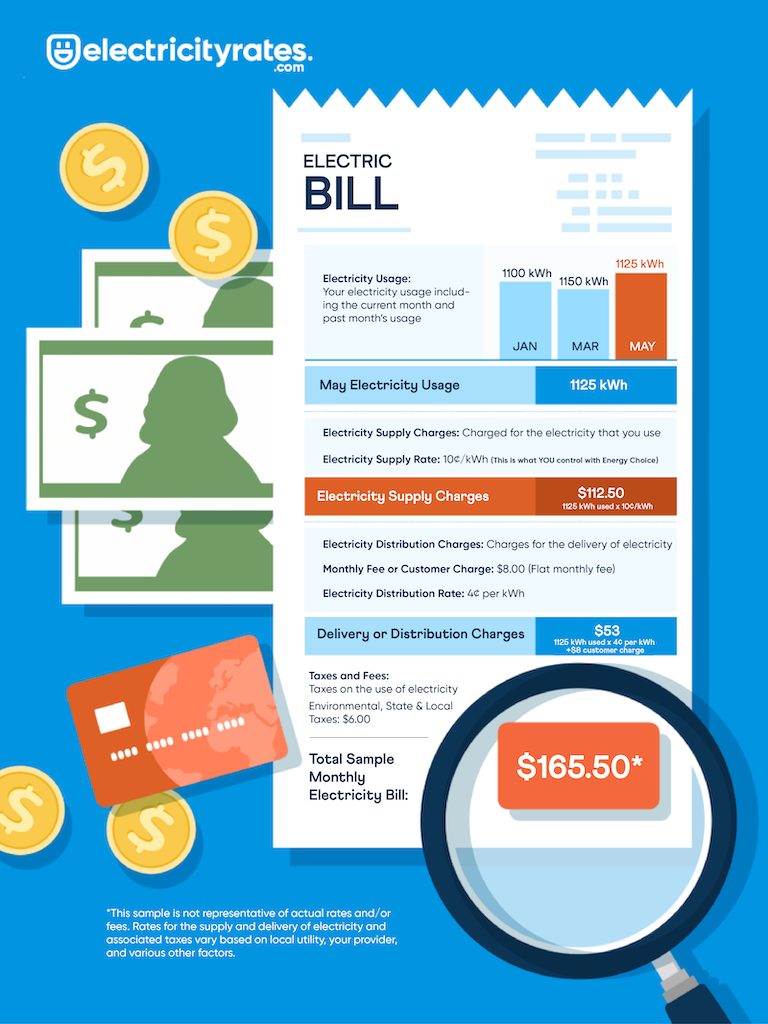
Learn more about your Potomac Edison electricity bill here.
Ways to Save Money on Your Potomac Edison Bill
If you are a Potomac Edison customer in Maryland, you have access to a variety of options funded through the state’s EmPOWER Maryland initiative, state government programs, and standard utility offerings.
1. Energy Rebates & Home Efficiency Programs
Potomac Edison offers quite a few “EmPOWER Maryland” rebates that help you pay less for energy-efficient upgrades or reward you for lowering your usage.
- Quick Home Energy Checkup (QHEC): You can schedule a certified energy auditor to come to your home for no additional cost. They will assess your energy use and install energy-saving items (like LED bulbs, smart power strips, and efficient showerheads) right on the spot.
- Appliance Rebates & Recycling: Get cash back when you buy ENERGY STAR® certified appliances, including refrigerators, clothes dryers, and pool pumps. Potomac Edison will often pick up your old, working fridge or freezer for free, recycle it responsibly, and give you a cash incentive (usually around $50-$75) for doing so.
- HVAC & Heat Pump Rebates: If you upgrade to a high-efficiency heating and cooling system or a smart thermostat, you can qualify for significant rebates worth hundreds of dollars.
- Home Performance with ENERGY STAR®: For a deeper dive, you can get a comprehensive home energy audit. If you choose to follow through with recommended insulation, air sealing, or duct sealing, the program will cover a massive chunk of the upgrade costs.
- Demand Response Program: By enrolling smart thermostats or specific appliances into peak-demand rewards programs, you can earn bill credits for allowing the utility to slightly reduce your energy load during peak summer days.
2. Financial & Bill Assistance Programs
If you need help catching up on bills or want more predictable monthly payments, the Maryland Office of Home Energy Programs (OHEP) and Potomac Edison offer several avenues:
- Electric Universal Service Program (EUSP): An income-eligible state program that provides financial assistance to help pay a portion of your current electric bill.
- Arrearage Retirement Assistance: If you have a large, past-due electric bill ($300 or greater), you may qualify for a one-time grant of up to $2,000 through this program to wipe away or reduce that old debt.
- Maryland Energy Assistance Program (MEAP): A federally funded grant that assists low-income households specifically with their heating bills.
- Utility Service Protection Program (USPP): Available to MEAP-eligible customers, this program protects you from service disconnections during the winter heating season, provided you enter into an even monthly payment plan.
- EmPOWER Low Income Energy Efficiency Program (LIEEP): Administered by the Maryland Department of Housing and Community Development (DHCD), this program provides free home weatherization, furnace cleanings, and insulation upgrades to low-income households at zero cost.
3. Rate Adjustments & Billing Tools
Sometimes just changing how you pay or checking your bill can yield savings.
- Equal Payment Plan (Budget Billing): While it doesn’t lower your total usage, it evens out your monthly payments so you don’t get hit with massive spikes during peak summer or winter months.
- Home Energy Analyzer: A free online tool on the Potomac Edison website that breaks down your usage habits and tells you exactly which appliances are driving up your bill.
What is Potomac Edison's Price to Compare?
The current Potomac Edison price to compare is 10.61¢ per kilowatt-hour (kWh) effective October 1st, 2026 through May 31st, 2027.
The “price to compare” (PTC) is a benchmark rate set by your local utility company that allows you to compare their standard electricity rate with offers from other retail suppliers.
| Price to Compare Effective Date Range | Price to Compare (rate per kWh) |
|---|---|
| October 1st, 2026 - May 31st, 2027 | 10.61¢ |
| June 1st, 2026 - September 30th, 2026 | 11.22¢ |
| June 1st, 2025 - September 30th, 2026 | 11.22¢ |
| October 1st, 2024 - May 31st, 2025 | 9.70¢ |
| January 1st, 1970 - September 30th, 2024 | 9.89¢ |
Maryland’s 100% Clean Energy Future
Maryland is currently pursuing one of the most aggressive climate agendas in the nation, anchored by the Climate Solutions Now Act. While previous laws aimed for 50% renewable energy by 2030, the state’s current mandate has expanded to achieve a 100% clean energy grid by 2035 and net-zero emissions by 2045. Potomac Edison is actively modernizing their grid to integrate high-voltage transmission and battery storage.
Residents can support this green transition immediately through two primary paths:
- Community Solar: The most accessible way to support local Maryland projects while lowering your bill.
- Green Power Plans: A “Energy Choice” option where you match your home’s usage with 100% Renewable Energy Certificates (RECs). Note that under Senate Bill 1 (effective 2025), retail energy contracts are now limited to 12-month terms to provide better consumer protection and price transparency.
Maryland Community Solar: Simplified Savings
Maryland has officially moved from a “pilot” to a Permanent Community Solar Program, removing the previous cap on clean energy development. This “virtual net metering” system allows renters, homeowners, and businesses to subscribe to local solar farms without any equipment installation. As of January 1, 2026, the program has become even more user-friendly with the launch of Utility Consolidated Billing, meaning your solar credits and subscription charges appear on a single utility bill rather than two separate statements.
Why Choose Community Solar in MD?
- Guaranteed Savings: Most plans offer a fixed discount (typically 10% to 25%) off your standard electricity rate.
- Equity-Focused: Maryland law mandates that 40% of program capacity is reserved for Low-to-Moderate Income (LMI) households, often with higher guaranteed savings rates.
- Top-Tier Managers: We partner with industry leaders like Arcadia and Nexamp to manage your subscription. While Arcadia specializes in a seamless digital enrollment experience, Nexamp often owns the local projects they manage—such as the landmark Kent Island array—providing long-term stability and direct community benefits.
If you would like more information about enrolling head over to our Maryland community solar page. Or to check if there are any current community solar projects available in your area of Maryland, enter your ZIP code at the top of this page.
Potomac Edison Energy Choice: From Monopoly to Modern Regulation
For decades in Western and Central Maryland, Potomac Edison (previously operating under Allegheny Power) functioned as a traditional, vertically integrated monopoly. As the primary utility serving Maryland’s panhandle and surrounding counties, Potomac Edison controlled the entire lifecycle of power—from generating electricity at regional coal and hydro plants to delivering it across thousands of miles of rural and suburban power lines. With zero market competition, Potomac Edison was the region’s sole provider, and customers paid a single, bundled rate for both the production and the delivery of their electricity, all tightly regulated by the Maryland Public Service Commission.
The Shift to Energy Choice (1999)
The energy landscape transformed when the Maryland General Assembly passed the Electric Customer Choice and Competition Act of 1999. This landmark legislation structurally dismantled the old monopoly model by “unbundling” Potomac Edison’s core operations into two distinct components:
- Supply: The actual electrical energy (kilowatt-hours) consumed by homes and businesses. This segment was opened to a competitive retail market, giving birth to Energy Choice.
- Delivery: The physical infrastructure—including the poles, substations, and wires. Safely maintaining this grid remained Potomac Edison’s exclusive, regulated responsibility.
Recent Regulatory Changes: Senate Bill 1 (SB1)
The competitive environment for Potomac Edison customers changed significantly with the enactment of Senate Bill 1 (SB1) in 2024. Effective as of 2025, this law was designed to curb predatory marketing and “bait-and-switch” pricing that some BGE customers experienced with third-party retail suppliers.
Impact on Potomac Edison Service Territory:
Price Protections: Senate Bill 1 (SB1) introduced stricter price caps, making it harder for retail suppliers to offer rates significantly higher than Potomac Edison’s Standard Offer Service.
- Financial Shifts: The law ended the “purchase of receivables” mechanism. Previously, Potomac Edison would pay suppliers for the energy they sold to customers and then handle the collection itself. Now, suppliers face higher financial risks, leading many to exit the Maryland market.
- Reduced Options: As a result of these stricter rules, the sheer volume of “Energy Choice” offers available to Potomac Edison customers has contracted. Many residents have found it more stable or cost-effective to return to the SOS rates, even as those utility-standard rates fluctuate with global energy markets.
While SB1 provides a safety net against deceptive “green power” claims and hidden fees, it has effectively cooled the competitive fever of the early 2000s, returning many local residents to Potomac Edison as their primary source for both delivery and supply.
Potomac Edison Contact Information
- Residential Customer Service Number: 1-800-686-0011
- Report An Outage Number: 1-888-544-4877
- Official Website
- eBill Information