The browser you are using is not supported. Please consider using a modern browser.


How to Compare ComEd Electricity Rates
The current ComEd price to compare is 10.10¢ per kilowatt-hour (kWh) effective October 1st, 2026 through May 31st, 2027. This guide explains how to read your ComEd electricity bill, compare electricity plan types and maximize electricity bill savings through a community solar program.

Key Takeaways
- While Commonwealth Edison (ComEd) delivers power to over 4 million customers and maintains the grid infrastructure, Illinois' deregulated market allows residents to switch to an Alternative Retail Electric Supplier (ARES) to secure a fixed rate or find a green energy plan.
- Monthly bills are split into fixed "Delivery Charges" for grid maintenance managed by ComEd and "Supply Charges" for the actual electricity used, which is the portion consumers can lower by switching providers.
- ComEd sets a standard baseline rate of 10.10¢ per kilowatt-hour (kWh) (effective June 1 through September 30, 2026) that serves as a benchmark for customers to evaluate if a retail provider's offer will actually save them money.
- Customers can support clean energy targets through 100% renewable plans or off-site community solar subscriptions (offering 10% to 20% savings without rooftop panels), while those facing financial strain can access relief via LIHEAP and specialized ComEd CARE programs.
Table of Contents

Commonwealth Edison (ComEd) is Illinois’ largest electricity utility, reliably delivering electricity to over 4 million customers. A unit of Chicago-based Exelon Corporation, they have been the primary electric utility in Illinois since 1907 with ties to Thomas Edison and the invention of modern electricity.
Since Illinois is a deregulated energy state, residents and businesses in the ComEd service area have the power to choose who provides their electricity supply. While ComEd continues to deliver your power and maintain the grid, you can switch to an Alternative Retail Electric Supplier (ARES) to lock in a fixed rate or find a green energy plan.
Reading Your ComEd Electricity Bill
When you look at the charges on your ComEd electricity bill, you will notice two categories of charges: delivery charges and supply charges. When you switch electricity providers, you are taking control of your electricity supply charges.
Delivery Charges
- Charged for the transmission and delivery of electricity
- For the maintenance of electricity infrastructure including poles and lines
- Do not change when you switch electricity providers
Supply Charges
- Charged by your provider for the electricity you use
- Based on your electricity usage (kWh) and supply rate (¢ per kWh)
- Change when you shop for lower electricity rates and switch
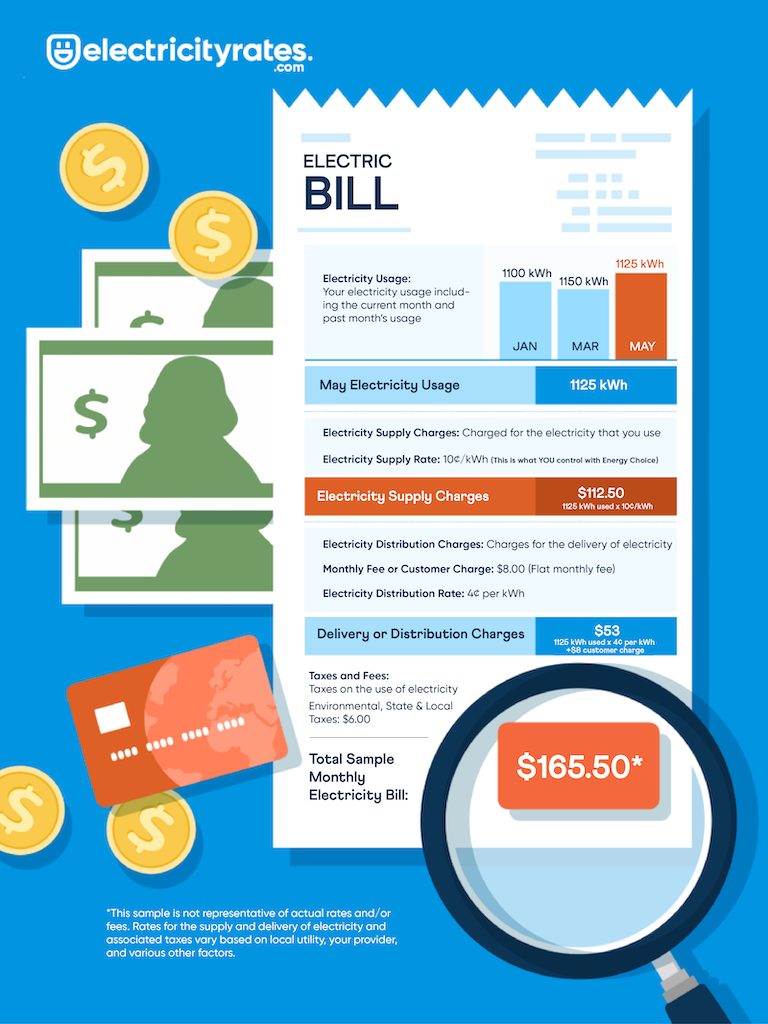
Learn more about your ComEd electricity bill, including where to find your account number, the Price to Compare, and more.
Financial Assistance Programs for ComEd Customers
If you are struggling to pay your bill, there are several programs available at the federal, state, and utility levels.
Federal & State Assistance
- LIHEAP (Low Income Home Energy Assistance Program): A federally funded program administered by the State of Illinois that provides one-time grants to help income-eligible households pay for energy bills.
- Weatherization Assistance Program (IHWAP): Helps low-income residents save money long-term by improving the energy efficiency of their homes (e.g., adding insulation or sealing air leaks).
ComEd Specific Programs
- ComEd CARE Programs: ComEd offers various grants for residential customers, including specific funds for non-profit organizations and military families.
- Give-A-Ray: A program for income-eligible customers to receive community solar credits on their bills without having to install panels.
- Budget Billing: This levels out your monthly payments by averaging your energy costs over the year, preventing high “peaks” during summer or winter.
- Payment Arrangements: If you fall behind, you can often set up a deferred payment plan through ComEd’s Smart Assistance Manager (SAM) tool on their website.
What is the ComEd Price to Compare?
The current ComEd price to compare is 10.10¢ per kilowatt-hour (kWh) effective October 1st, 2026 through May 31st, 2027.
The “price to compare” (PTC) is a benchmark rate set by your local utility company that allows you to compare their standard electricity rate with offers from other retail suppliers. ComEd resets their PTC twice per year: June 1st and December 1st.
| Price to Compare Effective Date Range | Price to Compare (rate per kWh) |
|---|---|
| October 1st, 2026 - May 31st, 2027 | 10.10¢ |
| June 1st, 2026 - September 30th, 2026 | 10.40¢ |
| January 1st, 2026 - May 31st, 2026 | 9.66¢ |
| October 1st, 2025 - December 31st, 2025 | 9.69¢ |
| June 1st, 2025 - September 30th, 2025 | 10.03¢ |
| January 1st, 2025 - May 31st, 2025 | 6.55¢ |
| November 1st, 2024 - December 31st, 2024 | 6.47¢ |
| October 1st, 2024 - October 31st, 2024 | 6.61¢ |
| August 1st, 2024 - September 30th, 2024 | 6.85¢ |
| June 1st, 2024 - July 31st, 2024 | 6.90¢ |
ComEd vs. Retail Electricity Providers: What’s the Difference?
In Illinois, the electricity market is deregulated, which means you have the power to choose who supplies your energy. However, it is important to distinguish between your utility and your supplier.
- ComEd (The Utility): ComEd is responsible for the delivery of electricity. They own and maintain the poles, wires, and meters. No matter who you choose as your supplier, ComEd will always deliver the power to your home, respond to outages, and send you your monthly bill.
- Retail Electricity Providers (The Suppliers): Also known as Alternative Retail Electric Suppliers (ARES), these companies purchase electricity on the wholesale market and sell it to you. You can choose to buy your “supply” from one of these companies or stay with ComEd’s default supply rate.
When you switch electricity providers, ComEd will:
- Continue to provide the delivery of electricity to all customers.
- Maintain responsibility for the wires, poles, and all outage restoration.
- Treat all customers equally, regardless of choice of service provider.
How to Compare Rates and Secure a Fixed-Rate Plan
Switching is a seamless process that doesn’t require any new equipment or a technician to visit your home.
- Find your “Price to Compare”: Look at your latest ComEd bill for the “Price to Compare.” This is the rate per kilowatt-hour (kWh) you currently pay for supply.
- Simplify Your Search with ElectricityRates.com: ElectricityRates.com offers a secure, fast, and simple process designed to streamline your rate comparison experience. We present you with only the best rates from top-rated and trusted electricity suppliers serving Illinois, saving you time and effort in your search for the ideal plan.
- Receive Confirmation of Plan Selection: After you find the right plan for you, select it, fill out the necessary information, and switch. Your new provider will take over within one to two billing cycles and you do not need to call your utility company.
Types of Electricity Plans in Illinois
When shopping for an electricity plan, you’ll typically encounter three main structures:
- Fixed-Rate Plans: Your price per kWh stays the same for the duration of your contract (e.g., 12 or 24 months). This provides budget stability.
- Variable-Rate Plans: The price can change monthly based on market conditions. These can be risky if energy prices spike.
- Green/Renewable Plans: These plans ensure that a portion (or 100%) of your energy usage is matched with Renewable Energy Credits (RECs) from sources like wind or solar.
Unlike a standard flat rate, this ComEd-specific program charges you based on the real-time hourly market price of electricity. It rewards those who can shift their heavy energy use (like laundry or dishwashing) to off-peak hours.
Get the Best ComEd Electricity Rates
The Future of Renewable Energy in Illinois
The future renewable energy goals for Illinois are defined by the landmark Climate and Equitable Jobs Act (CEJA), passed in 2021. The most significant long-term target is for Illinois to achieve 100% clean energy in the electricity sector by 2050. This comprehensive goal requires phasing out all carbon emissions from private coal and natural gas power plants by 2045 and includes a series of interim steps to dramatically increase renewable sources.
You don’t have to wait to support green energy. You can sign up for a 100% renewable energy plan in Illinois today. The electricity that comes to your home is the same, however, your energy usage is offset with renewable energy credits purchased by your supplier. These credits ensure that more renewable energy enters the grid.
Community Solar Options in Illinois
Community solar allows multiple participants—including renters, homeowners, and businesses to share the benefits of a single, off-site solar array. These projects are built within your utility’s service territory (such as ComEd or Ameren) and feed clean energy directly into the local grid. The program offers residents and businesses a way to lower electricity bills without the need for rooftop panels. Through state-backed programs like Illinois Shines and Illinois Solar for All (ILSFA), you can subscribe to a local “solar garden” and receive guaranteed monthly credits.
Why Choose Community Solar in Illinois?
- Guaranteed Savings: Most subscribers see a 10%–20% reduction on the supply portion of their electricity bill.
- No Upfront Costs: Unlike rooftop solar, there is no equipment to buy or install.
- Accessibility: Perfect for renters or those with shaded roofs.
- Support Local Green Energy: Your subscription helps Illinois reach its goal of 100% clean energy.
Leading Illinois Solar Programs
The Illinois Power Agency (IPA) and the Illinois Commerce Commission (ICC) oversee the state’s two primary incentive paths:
- Illinois Shines: The primary program for most residential and business customers looking for predictable, long-term savings.
- Illinois Solar for All (ILSFA): A specialized program providing even deeper financial relief (often up to 50% savings) for low- to moderate-income households and non-profit organizations.
Note: For the 2026 program year, the state has expanded capacity to 1,200 MW, meaning more “solar garden” spots are available than ever before.
Enroll in Community Solar in 3 Easy Steps
Community solar providers such as Arcadia Energy and Nexamp act as subscriber managers, connecting residential and business customers to these local solar projects.
1. Verify Eligibility: Confirm you are a customer of ComEd or Ameren.
2. Find a Local Project: Use your ZIP code to locate open solar gardens in your area.
3. Start Saving: Once connected, your subscriber manager handles the logistics. You’ll see “Solar Credits” applied directly to your utility bill each month.
Check current availability for community solar projects in your part of Illinois. Enter your ZIP code at the top of this page to see a list of active solar gardens and start your application today.
ComEd Contact Information
- Residential Customer Service Number: 1-800-334-7661
- Official ComEd Website
- Report an Outage
- Outage Map
ComEd FAQ's
-
No, your electricity delivery will not change. ComEd is your utility company and remains entirely responsible for safely delivering electricity to your home, maintaining the physical infrastructure (like poles, wires, and meters), and repairing power outages. They treat all customers equally regardless of which company provides the actual energy supply.
-
Your ComEd bill is broken down into two main categories:
Delivery Charges: Fixed costs paid to ComEd to maintain the physical power grid and safely transport electricity to your home. These do not change if you switch providers.
Supply Charges: The variable cost for the actual electricity you consume (measured in kWh). This is the portion of the bill you can change by shopping around for a retail supplier plan.
-
Yes, community solar is highly accessible to renters, as well as homeowners with shaded roofs. By subscribing to a local “solar garden” through programs like Illinois Shines or Illinois Solar for All, participants can support local green energy and see a guaranteed 10% to 20% reduction on the supply portion of their electricity bill, all without having to buy or install rooftop panels.
-
Several financial assistance paths exist, including the federally funded Low Income Home Energy Assistance Program (LIHEAP) and the Weatherization Assistance Program (IHWAP). ComEd also directly provides localized help through its ComEd CARE grants, Budget Billing to average out seasonal peaks, and Give-A-Ray, which provides community solar credits to eligible lower-income households.