The browser you are using is not supported. Please consider using a modern browser.


A Guide to Virginia Electricity Rates
Virginia’s average electricity rate is 15.87 cents per kilowatt-hour. Explore our guide to Virginia utility companies, manage your bill, and access savings through Virginia community solar, net metering, and energy efficiency programs.
Table of Contents


What is the Average Cost of Electricity in Virginia?
- As of March 2026, the average residential electricity rate in Virginia stands at 15.87 cents per kilowatt-hour
- Virginia’s average monthly electricity bill is $148.77, which is modest compared to other states in the region.
- The average residential home uses 1,032 kWh of electricity per month. This is significantly higher than the national average of 863 kWh.
What are the Utility Companies in Virginia?
Utility companies are responsible for delivering electricity to homes and businesses and maintaining the grid infrastructure. Virginia’s grid is managed primarily by two major investor-owned utilities:
Popular Virginia Utility Companies
- Appalachian Power: Serves approximately 1 million total customers and operates a 11,000-square-mile territory in Central and Southwestern Virginia, spanning 34 counties.
- Dominion Energy: Serves over 2.7 million electric customer accounts across most of Central, Eastern, and Northern Virginia.
Your local utility sets your supply rate through a state regulatory process managed by the State Corporation Commission (SCC). Rates consist of a base rate for infrastructure and a “fuel factor” for energy generation. Rates classes are established to offer varying rates for residential, commercial, and high-energy users like data centers.
Electric Cooperatives in Virginia
Not everyone in Virginia is served by an investor-owned utility. Virginia is also home to 13 electric cooperatives (member-owned utilities), which collectively serve hundreds of thousands of meters across the state.
How Electric Co-ops Work:
- Co-ops are owned by the members they serve (customers are also member-owners).
- They typically operate at cost, and when there are “margins” left over, many co-ops return value to members through capital credits (often as a bill credit or check, depending on the co-op).
- In the Virginia/Maryland/Delaware region, VMDAEC notes cooperative systems serve more than 700,000 meters in Virginia.
If you’re relocating, it’s worth checking whether your address is served by Dominion, Appalachian Power, a municipal utility, or a cooperative because billing structures and programs can differ.
How to Save Money On Your Virginia Electricity Bill
Guided by the Virginia Clean Economy Act, the Commonwealth is undergoing a historic transition toward a 100% carbon-free grid by 2045–2050. Major utilities like Dominion Energy and Appalachian Power are driving this shift by replacing fossil fuel plants with large-scale renewable infrastructure, including massive offshore wind projects, expanded solar farms, and critical battery storage systems to ensure long-term grid reliability.
Virginia residents have more options than ever to support the green transition, whether they own a home or rent an apartment. There are two primary ways to support Virginia solar energy:
- Community Solar: This is the most accessible way to support local Virginia clean energy without the upfront cost of panels. It allows you to benefit from a “share” of a large solar farm. Community solar is designed to give universal access to solar benefits, but is an ideal solution for renters, condo owners, or homeowners with shaded roofs who cannot install their own solar equipment.
- Solar Panel Installation: For homeowners and businesses with suitable roofs, installing a private solar system offers the highest long-term financial return. By generating your own power, you can significantly reduce your monthly supply charges. Plus, Virginia’s Net Metering policies allow you to sell excess energy back to the grid for credit on future bills.
Community Solar Options in Virginia
Virginia’s community solar program (sometimes referred to as “shared solar”) has moved from its initial rollout into a robust phase of development. This “virtual” solar model is designed for everyone—especially renters and those with shaded roofs. Under this system, you subscribe to a portion of a local solar farm, and the energy produced is credited directly to your utility bill through utility consolidated billing, meaning your solar credits and subscription charges appear on a single utility bill rather than two separate statements.
Why Choose Community Solar in VA?
- Guaranteed Savings: Most Virginia subscribers see a 5%–15% reduction on their monthly electricity costs through bill credits. Virginia law requires a significant portion of shared solar capacity (at least 30%) to be reserved for Low-Income Customers.
- No Upfront Costs: Unlike residential solar installations, there is no equipment to buy, install, or maintain.
- Accessibility: An ideal solution for renters, apartment dwellers, or homeowners with shaded roofs.
- Support Local Green Energy: Your subscription directly supports New York’s goal of a 100% carbon-free grid.
Enroll in Community Solar in 3 Easy Steps
Community solar providers such as Arcadia and Nexamp act as subscriber managers, connecting residential and business customers to local projects.
1. Verify Eligibility: Confirm you are a customer of a participating utility like Dominion Energy or Appalachian Power.
2. Find a Local Project: Use your ZIP code to locate active or upcoming solar farms in your specific utility territory.
3. Start Saving: Once enrolled, your provider handles the logistics. You will see “Solar Credits” applied directly to your utility bill each month, reducing the total amount you owe.
Virginia Utility Assistance Programs
If you’re having trouble paying your bill, you’re not alone and there are several places to start:
Federal and State Programs:
- Virginia Energy Assistance Program (EAP): Run through the Virginia Department of Social Services, Virginia’s EAP helps eligible households meet immediate home energy needs through multiple components including Crisis Assistance, Fuel Assistance and Cooling Assistance.
- Weatherization Assistance (WAP): Virginia’s Weatherization Assistance Program, mentioned earlier, focuses on improvements like air sealing, insulation, and HVAC-related repairs to reduce energy use.
Assistance Options Offered by Local Utilities:
- Percentage of Income Payment Plan (PIPP) is a specialized program for customers of Dominion Energy and Appalachian Power. It caps monthly electric bill payments at a percentage of a household’s income (6% for all-electric homes, 10% otherwise).
- Dominion’s EnergyShare® program includes bill payment assistance and some no-cost efficiency upgrades through local agencies.
- Appalachian Power Neighbor-to-Neighbor program which partners with the Dollar Energy Fund, provides grants directly to a customer’s account to prevent disconnection or restore service.
Harness the Power of the Sun Without Panels
Access the benefits of a nearby solar farm—guaranteed discounts and clean energy—all through your existing utility bill. It’s the easiest way to go solar!
How to Read Your Virginia Electricity Bill
Even if your bill layout varies by utility, most Virginia electricity bills include the same building blocks:
- Usage: This is the number of kilowatt-hours (kWh) you used during the billing period. It’s the biggest driver of your total cost.
- Supply charges: Supply charges are what you pay for the electricity that you use. By default, these charges are set by your utility.
- Delivery charges: These charges cover the poles, wires, substations, and the high-voltage network that gets electricity to your neighborhood and home.
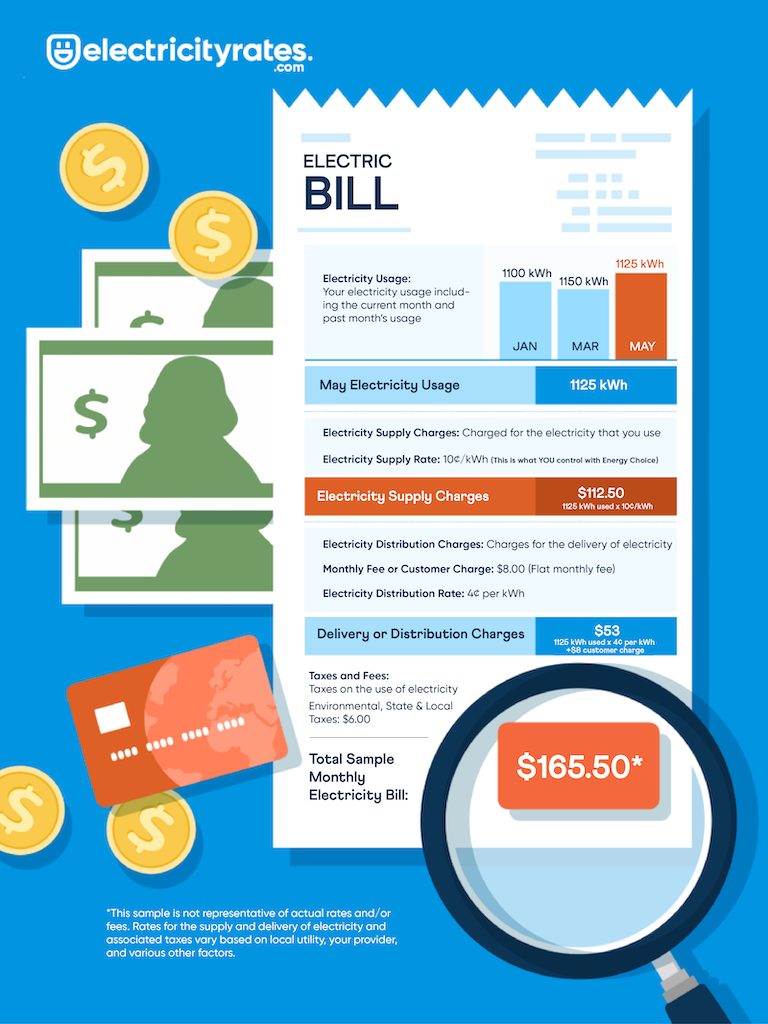
For a more-detailed breakdown on how to read your utility bill, check out our guide here.
Why are VA Electricity Bills Rising?
- Infrastructure and Base Rate Increases: State regulators approved the first base rate hike for Dominion Energy since 1992 to cover the rising costs of labor and grid equipment like transformers, poles, and wires.
- Surging Data Center Demand: Rapid expansion of energy-intensive data centers has necessitated massive investments in new transmission lines and power generation, some of which are recovered through residential rates.
- Fuel and Capacity Costs: Higher wholesale prices for natural gas and significant jumps in regional “capacity” auction prices—driven by overall grid demand—have been passed through to consumers via fuel factor adjustments.
Does Virginia Offer Net Metering?
Yes, Virginia offers net metering, though the exact rules and limits vary by utility type and customer class. For those unfamiliar with the term, “net metering” is a system that allows owners of solar panels or other renewable energy systems to send excess electricity back to the grid, earning credits to offset their utility bills. During times when you need to pull electricity from the grid (like at night or on cloudy days), the utility company deducts from your energy credits instead of charging you. At the end of the month, you’ll only be billed for the electricity you took from the grid. Another perk is that credits roll over from month to month and they don’t expire at the end of the year.
- Dominion notes net metering rules are administered by the Virginia SCC and published in the Virginia Administrative Code.
- Virginia’s Code also includes net metering provisions for electric cooperatives (with specific capacity caps tied to system peak).
Practical takeaway: Net metering can meaningfully improve rooftop solar economics, but the details (crediting method, limits, interconnection steps) matter, so always confirm with your utility before signing a solar contract.
Rebate and Tax Credit Programs for Home Energy Improvements
If rooftop solar or shared solar isn’t your path right now, home efficiency upgrades are often the fastest way to cut bills because they reduce the kWh you use.
- Start with incentives and rebates:
Virginia DEQ’s “Virginia Information Source for Energy” compiles a wide range of programs and incentives, including rebates, tax credits, and utility incentives that may apply to homeowners and renters depending on the program.
- Don’t skip federal tax credits (when available):
The IRS describes an Energy Efficient Home Improvement Credit of up to $3,200 for qualifying improvements after Jan. 1, 2023 through Dec. 31, 2025, with credit amounts and limits depending on the upgrade type.
High-impact upgrades that can pay off in Virginia’s climate:
- Air sealing and insulation (especially attic and duct sealing)
- Heat pump upgrades (space heating/cooling)
- Smart thermostats and HVAC tune-ups
- Efficient lighting and appliance replacements (especially if you’re moving into an older home)
And if you qualify, Virginia’s Weatherization Assistance Program can reduce energy use by installing cost-effective efficiency measures.
Explore More Resources About Electricity Rates
Virginia’s grid is changing fast but with the right mix of efficiency upgrades, solar options, and assistance programs, you can stay in control of your costs. For more help, explore our site for easy-to-understand guides on reading your bill, making energy-efficient upgrades, and understanding rooftop and community solar so you can make smarter energy decisions wherever you live.
Virginia Electricity FAQ's
-
In January 2026, the State Corporation Commission (SCC) approved the first base rate increase since 1992, adding an average of $11 to $13 per month to typical residential bills. This adjustment reflects the rising costs of grid modernization and new generation projects, primarily due to energy demand from Northern Virginia’s “Data Center Alley”.
-
Unlike “deregulated” states, where you can shop for different energy supply rates, Virginia is a regulated market. This means your electricity is provided and billed by a single utility (like Dominion Energy or Appalachian Power) based on your location. Because you can’t switch suppliers, saving money in Virginia typically involves reducing your usage through efficiency or participating in solar programs.
-
With the transition to a 100% carbon-free grid by 2045 (VCEA), “Shared Solar” (Community Solar) has become a breakout search term. Residents are looking for ways to lower their bills without the $15,000+ cost of rooftop panels. The most common queries involve how to subscribe to local solar farms to receive “bill credits,” especially for renters or those in Dominion Energy territory, where low-income participants can bypass certain “minimum bill” fees.
-
Net metering allows Virginia residents with solar panels to “store” excess energy on the grid. When your panels produce more electricity than you use (common during sunny days), the extra power flows back to the grid, and your utility gives you a 1:1 credit on your account. You can then use those credits at night or on cloudy days. As of early 2026, these credits typically roll over month-to-month, allowing you to use summer overproduction to offset higher winter heating bills.