The browser you are using is not supported. Please consider using a modern browser.


How to Compare Con Edison Electricity Rates

Key Takeaways
- Your Con Edison statement is split into supply charges (the cost of the electricity itself, which you can shop for via third-party providers) and delivery charges (the fixed cost for Con Edison to maintain the grid and deliver power to your home).
- Residents can lower their costs through instant rebates for smart thermostats and appliances, income-based discount programs like EAP or the new 2026 moderate-income tier (EEAP), and budget billing to stabilize monthly payments.
- Renters and homeowners can save 5%–15% on their monthly bills by subscribing to local solar farms, allowing them to support renewable energy and receive bill credits without installing rooftop panels.
- In alignment with New York state mandates, Con Edison is investing billions to reach 100% zero-emission electricity by 2040 by building clean energy hubs and incentivizing the switch from fossil fuels to electric heat pumps.
Table of Contents

Reading Your Con Edison Electricity Bill
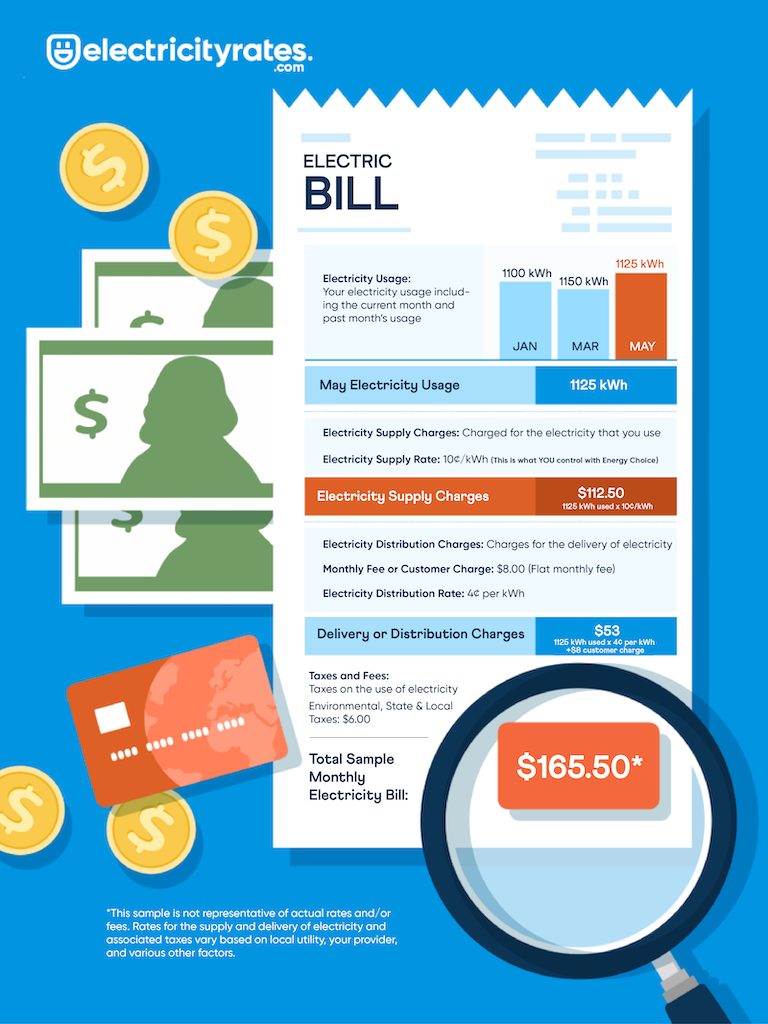
Understanding your Con Edison electricity bill is critical to managing your energy costs effectively. Your Con Edison bill is divided into two main components: supply charges and delivery charges.
- Supply charges cover the cost of the electricity you use and can vary depending on your chosen supplier. If you haven’t selected an alternative supplier, these charges will be based on Con Edison’s Standard Service rate.
- Delivery Charges cover the cost of transmitting and distributing electricity to your home or business. These charges are set by Con Edison and approved by the New York State Public Services Commission, and they remain the same regardless of your chosen supplier.
Ways to Save Money on Your Con Edison Electricity Bill
Con Edison offers a fairly robust menu of programs to help lower your bill, ranging from instant cash rebates for smart tech to monthly discounts based on income. As of 2026, here are the primary ways you can save:
1. Smart Technology & Instant Rebates
If you’re looking for a “quick win,” start here.
- Smart Thermostat Rebate: You can get an $85 rebate for enrolling an eligible smart thermostat (like Nest, Honeywell, or Sensi) into their program.
- Retention Bonus: If you stay in the program and participate in “energy-saving events” (letting Con Ed subtly adjust your AC during peak heat), you can earn an additional $25 per year starting in your third year.
- Appliance Rebates: They periodically offer rebates for upgrading to Energy Star-certified appliances, particularly high-efficiency heat pumps and water heaters.
2. Bill Discount Programs (Income-Based)
Con Edison recently expanded these programs in 2026 to help more households.
- Energy Affordability Program (EAP): If you already receive government assistance (like SNAP, HEAP, or Medicaid), you likely qualify for a monthly discount on your bill. Many are enrolled automatically, but it’s worth double-checking your account.
- Enhanced Energy Affordability Program (EEAP): This is a newer tier for 2026. It targets “moderate-income” families who might not qualify for traditional assistance but still struggle with NYC/Westchester costs. Eligibility is based on being below the area’s median income.
- Home Energy Assistance Program (HEAP): A federally funded program that provides a one-time annual payment toward your heating costs (whether you heat with electricity or gas).
3. Usage Management & Rewards
- Smart Usage Rewards (Demand Response): For those willing to be flexible, you can get paid to use less energy during “peak demand” hours (usually the hottest summer afternoons). Businesses and large residential buildings often see the biggest perks here, but residential “aggregators” allow individuals to join in.
- Budget Billing: While this doesn’t technically lower your total cost, it levels out your payments. Instead of a $400 bill in August and a $100 bill in October, you pay a consistent average every month, which helps with financial planning.
4. For Multifamily & Business Owners
If you own a building or a small business, the incentives are much larger:
- Electrification Incentives: Con Edison is pushing hard for “fuel switching.” They offer massive incentives—sometimes up to $5,000–$14,000 per dwelling unit—for buildings that switch from fossil fuel heating to high-efficiency heat pumps.
- Weatherization: Incentives are available for attic insulation, pipe insulation, and window upgrades, often covering 50% to 85% of the project cost depending on the building type.
New York’s Clean Energy Future
New York state is currently operating under the Climate Leadership and Community Protection Act, which mandates that the state achieve 70% renewable electricity by 2030 and a zero-emission power grid by 2040. To meet these aggressive goals, Con Edison is investing billions into its “Clean Energy Commitment,” a strategy centered on transitioning the city’s aging infrastructure into a modern, resilient “grid of the future.”
A major part of this transition involves building massive clean energy hubs that allow offshore wind and solar power to be distributed throughout the five boroughs. Con Edison is also actively incentivizing the electrification of buildings through heat pump adoption and expanding the grid’s capacity to support a massive surge in electric vehicle charging. By 2050, both the state and the utility aim to reach net-zero emissions, balancing these environmental upgrades with new programs designed to keep energy costs manageable for low-income residents.
Community Solar Options in New York
Community solar allows multiple participants—including renters, homeowners, and small businesses—to share the benefits of a single, off-site solar array. These projects are built within your Con Edison’s service territory and feeds clean power directly into the local grid. This program offers a way to lower electricity bills without installing rooftop panels. Through state-backed initiatives like NY-Sun, you can subscribe to a local “solar farm” and receive guaranteed monthly credits on your utility bill.
Why Choose Community Solar in New York?
- Guaranteed Savings: Most New York subscribers see a 5%–15% reduction on their monthly electricity costs through bill credits.
- Accessibility for All: Unlike residential solar installations, there is no equipment to buy, install, or maintain. It’s an ideal solution for renters, apartment dwellers, or homeowners with shaded roofs.
- Top-Tier Managers: Industry leaders like Arcadia and Nexamp to manage your subscription. While Arcadia specializes in a seamless digital enrollment experience, Nexamp often owns the local projects they manage—such as the landmark Kent Island array—providing long-term stability and direct community benefits.
If you would like more information about enrolling head over to our New York community solar page. Or to check if there are any current community solar projects available in your area of New York, enter your ZIP code at the top of this page.
About Con Edison & Energy Choice
Con Edison’s was founded in 1823, promising to light up New York City’s streets with gas lamps. Now they operate one of the largest energy delivery systems in the world, providing energy to over 10 million people in New York City and Westchester County.
While Con Edison remains the sole company responsible for delivering energy and maintaining the physical infrastructure, residents now have Energy Choice. This allows you to compare electricity rates, take advantage of competing electricity offers and switch providers. These third-party providers often offer specialized plans, such as fixed-rate contracts to avoid seasonal price spikes or “green” plans that guarantee the use of renewable energy sources all while still receiving one bill from Con Edison.
Con Edison Service Area
Con Edison delivers electricity to all of New York City and Westchester County. In addition to NYC, they serve the following cities:
- Mount Vernon
- New Rochelle
- White Plains
- Yonkers
Con Edison Contact Information
- Residential Customer Service/Emergency Number: 1-800-752-6633
- Start, Move or Stop Con Edison Service
- Electricity Outage Map