If you live in an area with Energy Choice, you’re able to switch electricity providers and often find better electricity rates than what your local utility offers by default. This is because electricity providers are able to compete for your business and offer competitive electricity prices.
Here is all of the information that you'll need for switching electricity providers and resting assured that you've made a great choice.
Table of Contents
- Why Switch Electricity Providers?
- What To Avoid When Switching
- How to Switch Electricity Providers
- Comparing Electricity Rates
- Switching to a 100% Renewable Energy Plan
- What Happens After You Switch Electricity Providers?
- Is Switching Electricity Providers Free?
- Who are the Best Electricity Companies?
- Questions to Ask Electricity Providers
Why Switch Electricity Providers?
Here are a few of the most common reasons you should switch electricity providers:
Saving Money
This is the chief reason that most electricity customers switch electricity plans. While a few cents per kilowatt-hour doesn't look like much on paper, many electricity customers have discovered that those few cents do add up.
With a competitive plan, it can amount to substantial savings over the course of a year.
Getting a Predictable Fixed-Rate
Many retail electricity customers have variable-rate plans, and a lot of these have found that this can be bothersome during months when prices fluctuate significantly.
When you're trying to figure a household budget, it's far easier when you know how much your electric bill (or any other bill, for that matter) is going to be from month to month.
Customer Incentives
Energy deregulation has led to increased competition in the electricity marketplace, and competition typically leads to savings for the end user. As a result, retail electricity providers often offer incentives for customers who switch their plans.
Some electricity providers offer introductory rates for new customers, or preferred rates for first responders, veterans and active military personnel. Other incentives may include things like cash-back bonuses, prepaid gift cards, smart thermostats, airline travel miles and travel club memberships.
Superior Customer Service
Another benefit of increased competition in the electricity market has been improved customer service. Many electricity providers have become known for their excellent customer service.
Since customer complaints are often logged with regulatory agencies and commissions, providers have a vested interest in avoiding complaints and providing superior service.
Easier Than Flipping on the Light Switch
Compare rates from leading providers in minutes and see how much you can save.
What To Avoid When Switching
When you hear about people paying substantially more for electricity when they switch to a retail electricity provider, it's most likely for one of these two reasons.
Dishonest Salespeople
While much of the industry is reputable, there are bad actors. A lot of the time, this comes in the form of a door-to-door representative that advertises a lower electricity rate, only to sign you up for a plan that costs you significantly more.
Other tactics include slamming, in which a salesperson will sign you up for an electricity plan without your permission. Slamming is illegal, and we've talked about how you can avoid it in our post on utility scams.
For these reasons, it's better to switch electricity providers through an electricity shopping platform like ElectricityRates.com, where you can calmly compare electricity plans from multiple leading providers.
Variable-Rate Electricity Plans
With a variable-rate electricity plan, your electricity rate changes from month to month based on market conditions and other factors. The problem is, there's no cap on how high your electricity rate can go, which is why these plans generally cost you more. This is why we advise that you should generally stay away from these plans.
How to Switch Electricity Providers
Switching is fast, simple and free with the Rate Comparison Tool on ElectricityRates.com. Follow this three-step process and complete the process in only a few minutes:
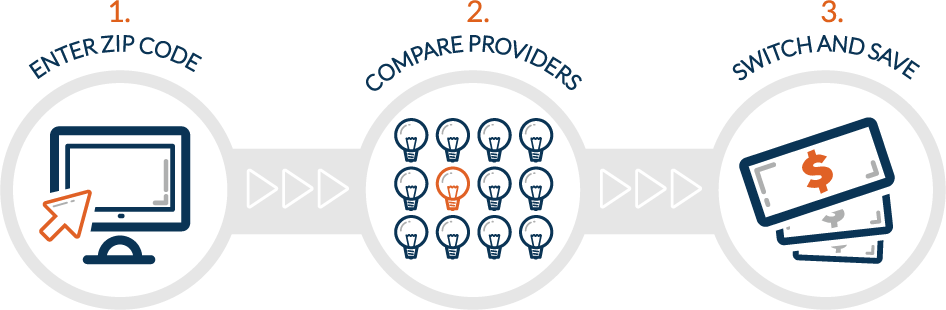
- Enter your ZIP Code: Find the Rate Comparison Tool at the top of the page and get rates in your area
- Compare Providers: Compare low fixed-rate and 100% renewable energy plans from leading providers
- Switch & Save: Make your choice, and complete the sign-up process
That's all it takes. Your new provider will take care of the rest and there's no need to call your local utility. Your new electricity rate will usually take hold in 1-2 billing cycles.
Comparing Electricity Rates
When you want to compare electricity rates, it's important to understand the difference between utility providers and electricity providers.
- Utility Provider – The entity that distributes electricity to your home and bills you. Where you live determines your utility provider, so you cannot switch it.
- Electricity Provider – Supplies the electricity you use. In states with Energy Choice, you can switch your electricity provider. If you've never switched electricity providers, your utility provider is likely your electricity provider as well.
For each of these providers, there's a different section on your electricity bill.
Delivery Charges
These charges go directly to your utility provider so it can maintain the infrastructure that ensures electricity is delivered to you reliably. These charges are set by the state, and will not change based on your electricity provider.
Supply Charges
These charges go to your electricity provider. When you switch electricity providers, this is the portion of your bill that changes. Your supply charges are based on your electricity supply rate, which is the rate you use when your comparing electricity providers. You can find your current electricity supply rate on your electric bill.
Do You Live in Texas?
If you live in Texas, these rules for comparing electricity rates do not apply to you. Texas has a unique electricity market where your electricity rate can change based on how much electricity you use. You should check out other resources on ElectricityRates.com to learn more about Texas electricity and how your usage can affect what you pay.
Switching to a 100% Renewable Energy Plan
Many retail electricity providers offer 100% renewable energy plans. When you sign up for a renewable plan, 100% of your electricity usage will be offset by green power generation.
There is no equipment to install and the electricity that comes to your home remains the same. Check out our switching to renewable energy page to learn more!
What Happens After You Switch Electricity Providers?
Actually, not muchother than any potential savings you see on your bill and any incentives you may have locked in. A lot of electricity customers worry that there will be an interruption in service when they switch their plan, but this is not the case.
In deregulated states, your utility company remains under obligation to bring electricity to your home regardless of any arrangements you make with a retail electricity provider, such as switching your electricity plan.
Is Switching Electricity Providers Free?
Comparing electricity rates and switching providers is fast, simple and free on ElectricityRates.com. You will never be charged for switching.
Who are the Best Electricity Companies?
While there are many providers out there, ElectricityRates.com only works with the most reputable ones so you don't have to worry about making the wrong choice.
A comprehensive list of electricity providers is available here. Our top providers include:
Questions to Ask Electricity Providers
There are several questions you will want to ask a retail electricity provider prior to signing any contract.
Are you licensed to do business as an electric supplier in my state?
In areas that allow electric choice, the retail electricity provider must be licensed by the state's utility regulator. Utility regulators are government entities that oversee and regulate utilities in the state, and may be called "public service commissions", "utility regulatory commissions" and other titles.
To find out what entity regulates your utility, click on your state on this map.
What is the rate per kWh that I am being offered?
The rate you are offered will be expressed in cents per kilowatt-hour (cents/kWh). You will want to compare this rate to the rate you are currently paying, often referred to as the Price-to-Compare if you are receiving electric supply from your utility. You can find the rate you are currently paying on your electricity bill. Of course, you'll want the new rate to be lower than your current rate.
Is the offered rate a fixed rate or a variable rate?
ElectricityRates.com only offers fixed-rate electricity plans. These plans have rates that don’t change for the duration of the contract. Variable-rate plans, on the other hand, change from month to month and will almost always cost you more.
How long does the contract last?
For variable-rate plans, the contract should be a month-to-month contract with the option to cancel at any month. Be sure to ask if the variable rate changes from month-to-month, by the amount of electricity you use, by time-of-day, or in another way. For fixed-rate plans, contracts may have durations of 3-, 6-, 12-, 18-, 24-, and 36-month terms. Shorter plans may have lower rates, but longer plans may save you more over the long-run. The choice is yours.
Are there any other charges other than the electricity supply rate?
In some areas, it is normal for retail electricity providers to add on additional fees. Sometimes, the additional fees would be paid to the utility anyway if you had not made the switch. Otherwise, if there are additional fees, ask that all fees are disclosed and described, and make sure that the fees aren't causing you to pay more than you otherwise would if you don't make the switch.
Do I have to sign a contract?
For a fixed-rate plan, you will generally have to sign a contract. For a variable-rate plan, you may or may not have to sign a contract. Be sure to ask if you can cancel the contract at any month if you are considering a variable rate contract.
Are there fees for early-termination of the contract?
Many retail electricity providers impose early termination fees if you can cancel service before the contract has expired. Make sure that these fees are disclosed, and ask if these fees can be reduced or avoided if you happen to want to cancel the contract in the future.
Is there a fee for switching to another provider or going back to the utility?
Some retail electricity providers may charge for a contract's early-termination (see question above). On the other hand, sometimes providers do not charge a fee for switching to another provider or going back to the utility.
What other fees are required to sign up? Is a credit check required?
Some retail electricity providers will require a security deposit and/or an enrollment fee. Ask that these fees be disclosed prior to signing any contract. For security deposits, ask how and when the deposit will be returned to you.
Does the provider offer other incentives for signing up?
Some retail electricity providers will offer sign-up bonuses, rewards programs, and other incentives such as free or discounted home energy audits, bill-bundling with home telephone providers, and free or discounted repair services on heating and cooling units. Be sure to first consider the rate you are paying before you take into account any extra incentives.
How long will it take for the new provider to show up on my electricity bill?
The name of your retail electricity provider may or may not show up on your electricity bill. The new rate will show up on your electricity bill in one to two billing cycles, depending on what day of the month that you decide to make the switch.
From where does the electricity come?
Most retail electricity providers purchase electricity made from traditional energy sources, including coal and natural gas. Providers may also offer partial or 100% renewable and/or green electricity. If you are environmentally conscious or just believe in going energy green'- ask about these options.